
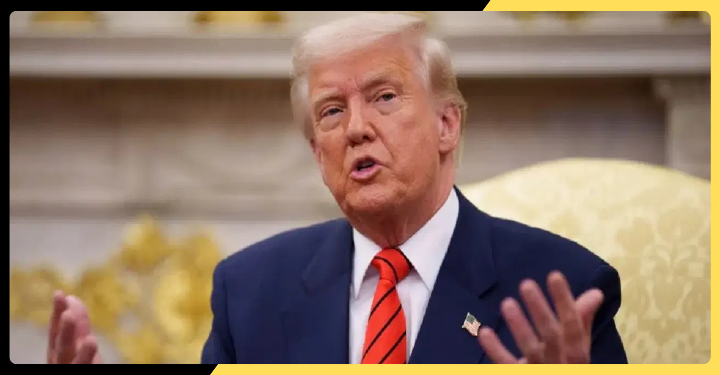
The United States has launched a significant overhaul of its trade policy following President Donald Trump’s announcement of new import duties targeting goods linked to forced labor from approximately 60 trading partners. The move comes as the administration’s temporary 10% blanket tariff on many imported products expires, replacing a broad tariff strategy with a more focused approach centered on labor standards and supply chain accountability.
Thank you for reading this post, don't forget to subscribe!According to administration officials, the revised policy is intended to strengthen enforcement against products believed to be manufactured using forced or exploitative labor while supporting fair competition for American businesses. The White House has described the initiative as part of a broader effort to ensure that imported goods entering the U.S. market meet internationally recognized labor standards.
Unlike the previous tariff system, which imposed a uniform 10% duty on a wide range of imports, the new framework targets products considered to present a higher risk of labor rights violations. Officials say customs authorities will work more closely with importers to verify supply chain compliance and identify shipments that may require additional scrutiny.
The policy is expected to affect several major industries, including textiles, apparel, footwear, electronics, automotive components, agriculture, furniture, and industrial manufacturing. These sectors often rely on complex international supply chains involving multiple suppliers across different countries, making labor verification a challenging process.
Businesses importing goods into the United States are expected to strengthen due diligence procedures to comply with the new regulations. Companies may be required to provide detailed records documenting the origin of raw materials, manufacturing facilities, labor conditions, and supplier relationships. Failure to demonstrate compliance could result in higher import duties, shipment delays, or restrictions on market access.
Supporters of the initiative argue that the policy will promote fair competition by preventing companies that rely on exploitative labor practices from gaining an unfair cost advantage. American manufacturing organizations have welcomed the announcement, saying domestic producers often struggle to compete against imported products manufactured under lower labor standards.
At the same time, retailers and multinational corporations have expressed concerns about the operational challenges associated with implementing the new requirements. Many businesses depend on long-established global supplier networks, and verifying every stage of production may require additional investment in compliance programs, supplier audits, and digital tracking technologies.
Trade experts note that supply chain transparency has become increasingly important in international commerce. Governments, investors, and consumers are placing greater emphasis on environmental, social, and governance (ESG) principles, encouraging companies to improve accountability throughout their production processes.
Financial analysts believe businesses with diversified sourcing strategies and well-developed compliance systems are likely to adapt more successfully than companies relying heavily on suppliers in regions facing increased regulatory scrutiny. Technology providers specializing in supply chain monitoring also expect rising demand for digital solutions that enhance product traceability and documentation.
International reaction to the policy has been mixed. Some governments have expressed support for stronger efforts to eliminate forced labor from global supply chains, while others have questioned whether unilateral tariff measures are the most effective method of addressing labor concerns. Several affected trading partners are expected to engage in diplomatic discussions with U.S. officials to better understand the scope and implementation of the new rules.
Human rights organizations have generally welcomed the administration’s increased focus on labor protections. However, advocacy groups emphasize that tariffs alone cannot eliminate forced labor. They argue that lasting progress will require stronger international cooperation, independent labor inspections, effective legal enforcement, and continued corporate responsibility initiatives.
Economists suggest the long-term economic impact of the policy will depend on how businesses adjust their sourcing strategies and how consistently customs authorities enforce the regulations. While some industries could experience temporary increases in operating costs, others may benefit from greater investment in ethical manufacturing and transparent supply chains.
The administration maintains that promoting human rights and protecting American economic interests are complementary objectives. Officials believe that encouraging responsible sourcing practices will strengthen confidence in global trade while supporting domestic industries that comply with fair labor standards.
As the new tariff framework takes effect, companies around the world are preparing for a changing regulatory environment. Importers are reviewing supplier relationships, strengthening compliance systems, and investing in technologies that improve visibility across global supply chains. The coming months will determine how effectively the policy balances ethical trade objectives with the realities of international commerce.
With this latest initiative, the United States signals a continued focus on integrating labor rights into trade policy. The effectiveness of the new measures will be closely watched by governments, businesses, investors, and human rights organizations as global trade continues to evolve under increasingly rigorous ethical and regulatory standards.