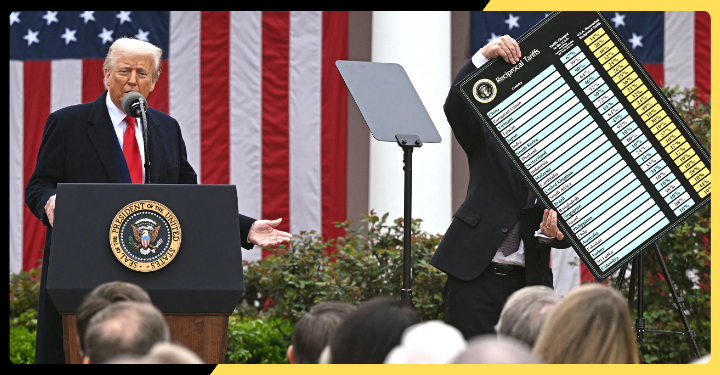
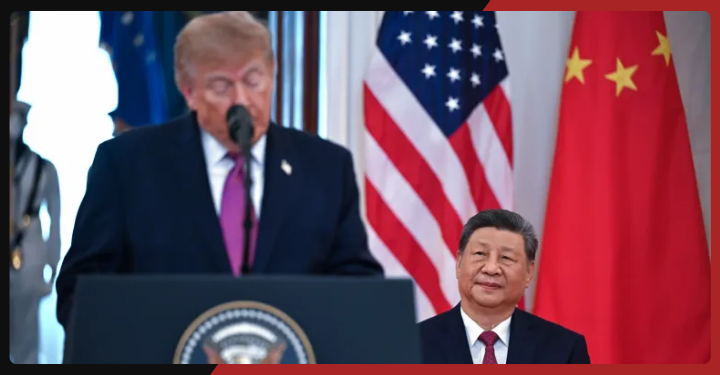
The broader message from the Trump-Xi summit is that the United States and China appear to be searching for a way to compete without allowing rivalry to become uncontrolled confrontation.
Thank you for reading this post, don't forget to subscribe!This approach can be described as competitive stability: both countries continue to protect their strategic interests while maintaining communication and seeking limited areas of cooperation.
The idea is especially important because a complete US-China partnership is unlikely in the current environment. Washington and Beijing have fundamentally different political systems and competing visions of economic and technological leadership.
At the same time, complete confrontation would carry enormous costs.
The two economies remain deeply connected. Their companies participate in global supply chains, while their policies influence international markets.
This creates an incentive for both governments to manage competition.
The September 24 summit provided several examples of this approach.
The trade truce was extended rather than allowed to collapse immediately. AI competition was discussed alongside the possibility of communication mechanisms. Taiwan remained a difficult issue, but the leaders continued direct dialogue. International issues such as Iran were part of the broader strategic conversation.
None of these developments represents a final settlement.
Instead, they illustrate a pattern in which Washington and Beijing attempt to create temporary arrangements that prevent individual disputes from destabilising the entire relationship.
Al Jazeera described the meeting as an effort to establish a “constructive China-US relationship of strategic stability”, while also noting that significant disagreements remained over issues including Iran, Taiwan, AI and trade.
This distinction is important.
Strategic stability does not mean strategic agreement.
The two countries can disagree strongly while maintaining diplomatic channels.
For the global economy, that may be particularly important.
A renewed tariff war could affect prices, manufacturing and supply chains. A serious technology confrontation could fragment the global semiconductor and AI industries. A military crisis involving Taiwan could create consequences for international trade and security far beyond East Asia.
The costs of uncontrolled escalation therefore provide a strong reason for continued communication.
At the same time, both countries are likely to continue competing.
The United States is attempting to maintain leadership in advanced technology and protect sensitive industries. China is investing heavily in domestic technological capacity and seeking greater economic resilience.
Both governments are also trying to strengthen relationships with other countries.
The result is a complex international environment in which cooperation and competition exist simultaneously.
The Washington summit therefore represents neither a complete reconciliation nor a return to the confrontational atmosphere seen during earlier stages of the trade conflict.
Instead, it appears to be another attempt to establish rules for managing rivalry.
The next test will come after the diplomatic ceremonies are over.
Negotiators will have to determine whether the trade extension can lead to a broader agreement. Technology officials will have to manage AI and semiconductor disputes. Military officials will need to maintain communication around Taiwan and other sensitive areas. Diplomats will continue dealing with global conflicts where Washington and Beijing have different interests.
The success of this approach will depend on whether both sides can maintain communication when disagreements inevitably return.
The Trump-Xi summit showed that the world’s two most powerful economies have strong reasons to avoid uncontrolled confrontation. It also showed that major strategic differences remain.
The central question for the coming months is therefore not whether the United States and China will compete. They almost certainly will.
The more immediate question is how that competition will be managed.
If Washington and Beijing can maintain dialogue while negotiating their economic, technological and security differences, the international system could experience greater predictability.
If communication breaks down, existing disputes could become more difficult to contain.
The September 24 summit thus represents an important chapter in an ongoing relationship rather than a final turning point. The meeting created diplomatic space, extended a temporary trade arrangement and reaffirmed the importance of direct communication. But the hardest negotiations remain ahead.
For the United States, China and the wider world, the coming months will show whether the stability discussed in Washington can be translated into durable policy.