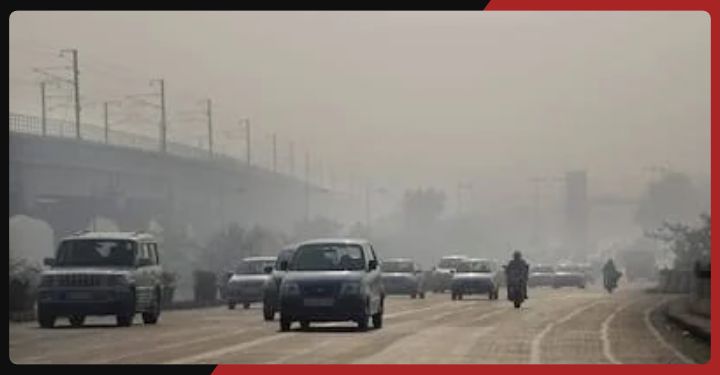
Delhi’s latest pollution emergency has once again brought the national capital’s winter preparedness under scrutiny. Despite the introduction of several pollution-control measures, air quality deteriorated sharply on November 2, pushing the city’s AQI into the very poor category and prompting the implementation of GRAP Stage II across Delhi-NCR.
Thank you for reading this post, don't forget to subscribe!The average AQI reached 324 at 4 pm, according to reports citing CPCB monitoring data. The development has raised questions about the effectiveness of existing pollution-control strategies and the ability of government agencies to prevent seasonal pollution from becoming a major public-health concern.
Delhi has struggled with severe air pollution for several years, particularly during the winter months. Every year, authorities introduce restrictions and enforcement measures to address emissions from vehicles, construction activities, industrial operations and waste burning.
However, the latest increase suggests that maintaining cleaner air remains a significant challenge.
Winter Action Plan Introduced Before Pollution Spike
The Delhi government began implementing its winter pollution-control measures from November 1.
The action plan includes vehicle-entry restrictions, construction-related dust-control measures, changes in office attendance and increased parking charges.
Authorities have also intensified inspections to identify vehicles without valid pollution certificates and construction sites violating environmental regulations.
During the first day of enforcement, penalties and environmental compensation amounting to approximately Rs 68.4 lakh were imposed, according to reported official data.
Nearly 15,000 vehicles were checked, 1,539 were turned back at border points and 566 challans were issued for Pollution Under Control certificate violations.
These figures demonstrate the scale of enforcement operations being undertaken by the authorities.
GRAP-II Adds Pressure on Government Departments
The implementation of Stage II means that pollution-control activities must now be intensified across the NCR.
Municipal authorities have been directed to increase mechanical road cleaning, water sprinkling and the use of anti-smog guns.
Traffic police must improve traffic management, particularly at congested intersections.
Construction sites will face additional inspections, while authorities are expected to take strict action against open burning of waste.
The measures require cooperation between several departments, including municipal corporations, traffic police, environmental agencies and district administrations.
Weather Conditions Remain an Important Factor
One of the major challenges in controlling Delhi’s pollution is the role played by weather conditions.
During winter, low wind speeds and unfavourable atmospheric conditions can prevent pollutants from dispersing.
Even when authorities take action against individual pollution sources, emissions from surrounding regions can continue affecting the national capital.
The CAQM considered forecasts from the India Meteorological Department and the Indian Institute of Tropical Meteorology before activating Stage II.
Weather experts have also warned that unfavourable wind conditions could allow pollutants to remain concentrated over Delhi-NCR.
Public Participation Cannot Be Ignored
The responsibility for controlling pollution does not rest exclusively with government agencies.
Residents can contribute by avoiding unnecessary vehicle journeys, using public transport and ensuring that household waste is disposed of properly.
Businesses and construction companies must follow environmental regulations, while industries should maintain compliance with prescribed emission standards.
People can also report pollution-related violations through official complaint applications.
Need for Sustainable Solutions
Environmental experts have consistently highlighted that temporary restrictions cannot permanently solve Delhi’s air pollution problem.
The city requires a long-term strategy involving cleaner transportation, improved public infrastructure, better industrial monitoring, effective waste management and coordinated environmental planning across neighbouring states.
Investment in public transport and reliable last-mile connectivity could encourage more commuters to leave private vehicles at home.
Similarly, better construction practices and scientific waste management could help reduce dust and local pollution.
A Crucial Period Ahead
The implementation of GRAP Stage II marks an important moment in Delhi’s winter pollution-control campaign.
Authorities must now demonstrate that the measures can produce visible improvements in air quality.
Residents will be watching closely as pollution levels continue to fluctuate.
If the situation worsens, stronger restrictions may become necessary under the higher stages of GRAP.
For now, Delhi faces an immediate challenge: preventing the current very poor air-quality situation from escalating into a wider pollution emergency.
The coming weeks will test the effectiveness of the government’s preparations, enforcement machinery and long-term environmental commitments.