
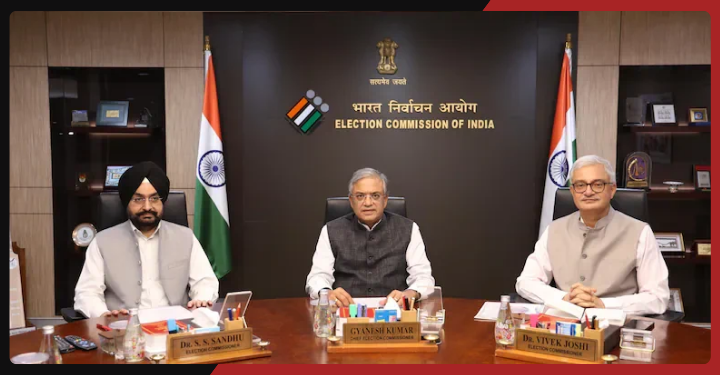
The controversy surrounding Chief Election Commissioner Gyanesh Kumar and the Election Commission has raised several questions about internal decision-making, electoral-roll revision and institutional transparency.
Thank you for reading this post, don't forget to subscribe!At the centre is a report that Election Commissioners Sukhbir Singh Sandhu and Vivek Joshi formally recorded objections on multiple occasions during the past 10 months. The reported objections involved issues including voter registration, deletion and restoration of names, Form 6 and electoral database management.
First: Did Election Commissioners disagree internally?
Reports indicate that Sandhu and Joshi recorded objections during internal deliberations. The Election Commission has not disputed that members can express different views. Instead, it says such differences are part of normal deliberation within a multi-member institution.
Second: Does an objection mean the Commission rejected a decision?
Not necessarily. The ECI has stressed that individual observations are different from final institutional decisions. Its stated position is that final decisions during the period under discussion were unanimous.
Third: What role does Gyanesh Kumar play?
Gyanesh Kumar is the Chief Election Commissioner and heads the three-member Election Commission. The Commission’s official website lists Kumar alongside Election Commissioners Sandhu and Joshi.
Kumar became the 26th CEC in February 2025 after serving as an Election Commissioner from March 2024.
Fourth: Why is SIR at the centre of the debate?
The Special Intensive Revision involves the review and updating of electoral rolls. Because electoral rolls determine which eligible citizens are registered to vote, questions concerning additions, deletions and verification have direct importance for elections.
Fifth: What has the Election Commission said about its technology?
The ECI has said that its digital platforms, including ECINet, operate under security protocols intended to prevent unauthorised manipulation or tampering. It has also maintained that its electoral reforms and actions comply with the law.
Sixth: Has the judiciary examined the electoral-roll process?
Yes. The Supreme Court has recently sought explanations from the Election Commission concerning notices issued during Delhi’s SIR process over “logical discrepancies.” The Court questioned the rationale for such notices and discussed ways voters could be given accessible channels to respond.
That judicial scrutiny is separate from the political debate over the reported internal objections. It concerns the operation of a specific electoral-roll revision process.
Seventh: Why are political allies now asking for clarification?
The issue has expanded beyond opposition criticism. On September 26, leaders associated with three NDA allies — Chirag Paswan, Upendra Kushwaha and Lavu Srikrishna Devarayalu — called for greater clarity from the Election Commission. Their public statements emphasised the importance of maintaining confidence in the electoral process.
The development highlights the significance of institutional communication.
The Election Commission has already issued a broad clarification: individual members may have differing opinions during deliberations, but the Commission says its final decisions were unanimous.
At the same time, questions about specific decisions remain matters that can be examined through official records, legal proceedings and further explanations from the poll body.
The controversy is therefore not simply about whether disagreement existed. It is also about what those disagreements concerned, how they were resolved, what procedures were followed and whether the final decisions complied with the applicable legal framework.
For voters, the most important aspect is the functioning of the electoral-roll system itself. Accurate voter lists are essential to elections, but accuracy also requires transparent procedures for correcting mistakes and responding to notices.
The coming period is likely to see continued discussion over SIR, the Election Commission’s internal processes and the constitutional responsibilities of its three members.
For now, the ECI’s publicly stated position remains that differing views are a normal part of institutional deliberation and that final decisions were taken unanimously. The reported objections, judicial scrutiny and calls for greater transparency remain part of the ongoing public debate.


