
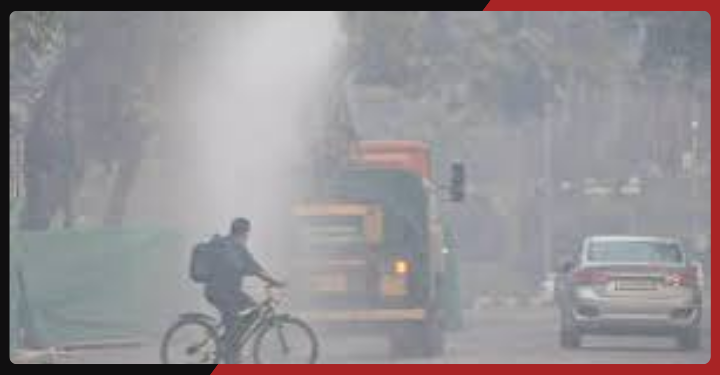
Delhi has announced a comprehensive winter pollution-control framework combining workplace changes, restrictions on vehicles, construction bans, higher parking fees and stronger enforcement measures.
Thank you for reading this post, don't forget to subscribe!The measures follow preparations by the Delhi government for the winter months, when weather conditions can contribute to poor air quality. Authorities have decided to introduce several restrictions in advance as part of a permanent framework rather than waiting for pollution levels to rise before taking action.
The framework includes a 50% work-from-home arrangement for government and private offices. Half of the workforce will work remotely while the other half attends offices. Essential services such as hospitals, public transport, electricity, water supply, sanitation and disaster management are exempt.
Government offices will also follow staggered schedules. MCD offices will operate from 8:30 am to 5 pm, while Delhi government offices will operate from 10 am to 6:30 pm. Private organisations have been encouraged to introduce similar staggered arrangements and promote shared transport.
Parking policy will also change. Charges at authorised parking sites will be doubled from November 1, 2026, to February 28, 2027. DMRC-owned and managed parking facilities are excluded from the revised charges.
Construction restrictions will be introduced in stages. Dust-generating demolition and outdoor civil construction activities will be prohibited from November 1 to January 31, except for essential public infrastructure projects. The restrictions will become more stringent from December 10, when a complete construction and demolition ban will apply until January 20, subject to specified exemptions.
The government will also restrict the entry of certain vehicles. Non-Delhi registered vehicles below BS-VI emission standards will be prohibited from entering the capital from November 1 to January 31. CNG and electric vehicles, emergency services and other specified categories will be exempt.
PUC enforcement will receive additional attention. Authorities have announced a strengthened “No Fuel, No PUCC” approach, under which vehicles without valid pollution certificates can face restrictions at fuel stations. Automatic number-plate recognition systems will support enforcement, particularly against vehicles with invalid certificates and end-of-life vehicles.
The framework also seeks to tackle dust and open burning. Large commercial buildings and major construction sites will be required to deploy anti-smog guns or mist systems where applicable. Resident welfare associations, institutions and other establishments will be expected to prevent the burning of waste, biomass, leaves and plastic.
These measures will operate alongside the Graded Response Action Plan. GRAP restrictions are triggered according to prevailing and forecast air-quality conditions, while the new winter framework establishes measures in advance for the November-February period.
The Delhi government has described pollution control as a year-round exercise, with the winter framework forming a recurring set of measures from November 1 to February 28. The approach covers several major areas of urban activity — commuting, construction, parking, workplace attendance, fuel enforcement and waste burning — as the capital prepares for another winter pollution season.