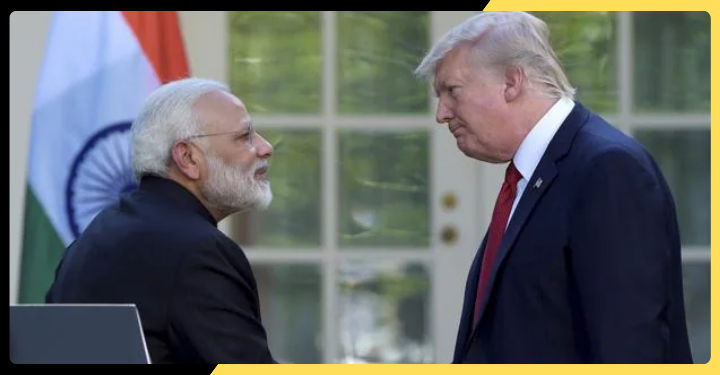
India and the United States are preparing to rebuild confidence in their bilateral relationship as Prime Minister Narendra Modi heads into high-level discussions with former U.S. President Donald Trump. The talks come at a time when both nations are navigating a complex international environment shaped by economic uncertainty, strategic competition, and shifting global alliances.
Thank you for reading this post, don't forget to subscribe!Over the years, India and the United States have developed one of the most significant partnerships in the modern world. What began as a cautious and often distant diplomatic relationship has evolved into a broad strategic alignment covering defense, trade, technology, energy, and global security cooperation. Despite this progress, recent concerns about trust and consistency in policy execution have highlighted the need for renewed engagement.
Modi’s emphasis on rebuilding confidence reflects an understanding that modern international partnerships require more than shared interests. They depend on sustained communication, policy predictability, and mutual reassurance. Without these elements, even strong relationships can face periods of uncertainty that limit their effectiveness.
One of the central themes expected to emerge from the talks is economic cooperation. India and the United States share a robust trade relationship that spans multiple industries, including information technology, pharmaceuticals, manufacturing, agriculture, and financial services. Both economies benefit significantly from this exchange, which supports jobs, innovation, and investment.
However, trade-related tensions have periodically surfaced due to differences in tariffs, regulatory frameworks, and market access. Businesses in both countries have called for clearer rules and more stable policy environments. Rebuilding confidence in economic engagement will likely require addressing these long-standing concerns and creating mechanisms that ensure greater predictability.
Technology is another key area where confidence-building measures are increasingly important. The two countries are deeply invested in emerging fields such as artificial intelligence, semiconductor production, cybersecurity, quantum computing, and space technology. These sectors are not only economically significant but also strategically sensitive. Cooperation in these areas requires a high degree of trust, particularly when it comes to data security, intellectual property, and supply chain integrity.
Defense and security cooperation remain among the strongest aspects of the bilateral relationship. India and the United States have conducted numerous joint military exercises, signed defense agreements, and expanded intelligence-sharing arrangements. Collaboration in the Indo-Pacific region has also grown as both countries seek to ensure stability in an area of increasing geopolitical importance. Despite this, long-term alignment depends on continued dialogue and confidence in shared objectives.
India’s foreign policy of strategic autonomy continues to play a defining role in shaping the relationship. New Delhi has consistently sought to maintain balanced relations with multiple global powers while preserving its independence in decision-making. While this approach allows flexibility, it can sometimes lead to differing expectations with close partners like the United States, contributing to perceptions of a trust gap.
Global geopolitical dynamics add another layer of complexity. Rising tensions between major powers, regional conflicts, and economic disruptions have made international cooperation more challenging. In this environment, stable partnerships are seen as essential for maintaining global order and addressing shared challenges such as climate change, cybersecurity threats, and supply chain vulnerabilities.
People-to-people connections continue to serve as a strong foundation for bilateral relations. The Indian-American community plays a significant role in strengthening ties through contributions in business, education, healthcare, technology, and public service. These connections help sustain goodwill and foster deeper cultural understanding between the two nations, even when political differences arise.
Analysts suggest that the focus on rebuilding confidence is not a sign of weakness but rather a reflection of the maturity of the relationship. Mature partnerships often involve periodic reassessment and adjustment to ensure they remain aligned with evolving realities. Open dialogue during the upcoming talks could help clarify priorities and reduce misunderstandings.
As Modi and Trump prepare for their meeting, expectations are centered on whether both leaders can translate diplomatic engagement into tangible outcomes. Success will depend on their ability to strengthen trust, address economic and strategic concerns, and identify new areas of cooperation.
Ultimately, rebuilding confidence between India and the United States will require sustained effort from both sides. If the talks succeed in reinforcing shared goals and improving communication, they could mark a meaningful step forward in one of the most important bilateral relationships in global affairs today.