
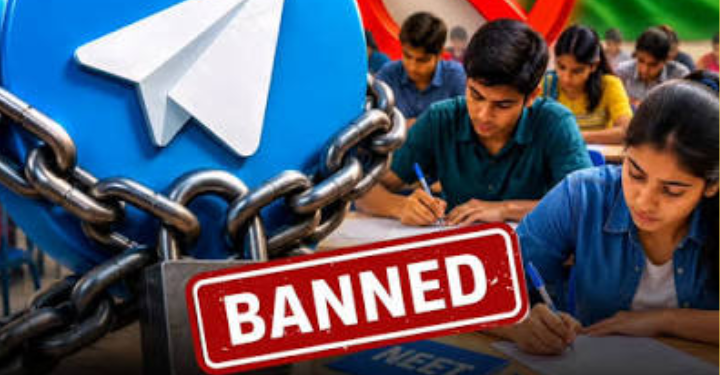
India has reinforced its commitment to protecting the integrity of competitive examinations by introducing temporary restrictions on Telegram amid investigations into alleged NEET-related fraud. The move reflects broader efforts by authorities to combat cheating, prevent paper leaks, and ensure that academic opportunities are awarded based on merit rather than manipulation.
Thank you for reading this post, don't forget to subscribe!The National Eligibility cum Entrance Test (NEET) is one of the most important examinations in the country. It serves as the primary pathway for admission to undergraduate medical and dental programs, attracting millions of candidates each year. Given the limited number of seats available and the intense competition involved, even minor security breaches can have significant consequences for students and educational institutions.
The latest controversy emerged after reports suggested that confidential examination materials may have been shared through online communication channels before the exam. These allegations prompted investigations by law enforcement agencies and education authorities, who sought to determine whether organized groups had used digital platforms to distribute unauthorized content. As part of these efforts, Telegram became a focus of attention due to its large user communities and extensive file-sharing capabilities.
Officials described the temporary restrictions as a precautionary measure designed to limit the spread of potentially compromised materials while investigations remained ongoing. Authorities emphasized that the action was not intended to target ordinary users but rather to address concerns related to examination security and prevent further misuse of digital communication tools.
The incident has highlighted the growing challenge of maintaining examination integrity in an increasingly connected world. Technology has transformed how students prepare for academic tests, providing access to online resources, virtual classrooms, discussion forums, and study groups. These developments have expanded educational opportunities and improved access to learning materials for millions of students.
However, the same technologies can also create vulnerabilities. Information can be transmitted instantly to large audiences, making it easier for dishonest individuals or organized networks to exploit digital platforms for fraudulent activities. Examination authorities around the world are facing similar challenges as they seek to adapt traditional security measures to the realities of the digital age.
In response to these evolving threats, India has been exploring a range of anti-cheating initiatives. Examination agencies have introduced stronger security protocols, enhanced surveillance systems, and stricter monitoring procedures. Technologies such as encrypted question paper distribution, biometric candidate verification, and artificial intelligence-assisted monitoring are increasingly viewed as essential tools in safeguarding high-stakes examinations.
Experts believe that anti-cheating strategies must evolve continuously to keep pace with changing technologies. Fraud networks often adapt quickly, using encrypted messaging services, anonymous accounts, and sophisticated communication methods to avoid detection. As a result, authorities must combine technological innovation with effective law enforcement and regulatory oversight.
The NEET controversy has also prompted discussions about accountability within the broader digital ecosystem. Policymakers are examining how technology companies can contribute to efforts aimed at preventing illegal activities while respecting user privacy and freedom of communication. Cooperation between government agencies, educational institutions, and platform operators is likely to become increasingly important in addressing future security challenges.
Students across the country have closely followed developments surrounding the investigation. Many candidates support stricter enforcement measures, arguing that strong action is necessary to preserve fairness and equal opportunity. For aspiring medical students, years of dedication and preparation often depend on the credibility of a single examination. Any suggestion of malpractice can undermine confidence in the system and create uncertainty about the value of hard work.
At the same time, educators have emphasized the importance of ensuring that anti-cheating measures remain proportionate and targeted. Digital platforms play a crucial role in modern education, enabling collaboration, information sharing, and academic support. Protecting examination integrity should not come at the expense of legitimate educational activities that benefit students nationwide.
As investigations continue, India’s response demonstrates a determination to address examination fraud and strengthen public confidence in the education system. The temporary restrictions involving Telegram represent one element of a broader strategy aimed at preserving fairness, transparency, and merit-based selection. Ultimately, the success of these efforts will depend on the ability of authorities, educators, technology providers, and students to work together in safeguarding the future of competitive examinations.


