
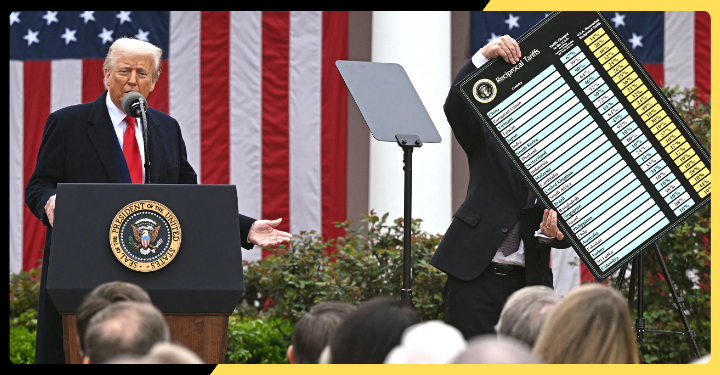
A major constitutional and economic battle is unfolding in the United States after a coalition of 25 states filed a lawsuit against the Trump administration over its latest round of tariffs on imports from dozens of global trading partners. The lawsuit, submitted to the U.S. Court of International Trade, challenges the legality of the administration’s trade policy and argues that the White House has exceeded the authority granted to the president under federal law.
Thank you for reading this post, don't forget to subscribe!The legal challenge comes as President Donald Trump continues to pursue an “America First” trade agenda, which emphasizes protecting domestic industries, reducing dependence on foreign imports, and confronting what the administration describes as unfair trade practices by several countries. The White House maintains that the new tariffs are an essential part of that strategy, while the coalition of states argues that the measures violate constitutional principles and existing federal trade statutes.
According to the administration, the tariffs apply to imports from nearly 60 countries and territories, with rates generally ranging between 10 and 12.5 percent. Officials have stated that the duties are intended to pressure foreign governments to eliminate forced labor from manufacturing supply chains and to create fairer conditions for American workers and businesses.
However, the lawsuit argues that the administration’s explanation does not justify the broad scope of the new trade restrictions. State attorneys general contend that the White House is attempting to achieve through a different legal mechanism what courts had previously prohibited under earlier tariff policies. They argue that changing the legal basis for imposing tariffs does not automatically make the policy lawful if it exceeds the authority granted by Congress.
The complaint emphasizes that the Constitution assigns Congress the primary responsibility for regulating foreign commerce. Although Congress has delegated certain powers to the executive branch through legislation, the states argue those powers are carefully limited and cannot be expanded through broad interpretations of existing laws.
The coalition also claims that the administration failed to follow the legal procedures required before introducing such extensive tariffs. According to the lawsuit, the government did not adequately demonstrate that the conditions required under federal trade statutes had been satisfied before imposing duties affecting a large number of international trading partners.
Beyond constitutional questions, the lawsuit highlights significant economic concerns. State officials argue that tariffs increase the cost of imported goods used by American businesses, forcing manufacturers, retailers, and distributors to pay higher prices for essential products and raw materials. Those increased costs often move through the supply chain and ultimately reach consumers.
Many industries could be affected if the tariffs remain in place. Manufacturers that rely on imported machinery, electronic components, industrial metals, chemicals, and specialized equipment may experience rising production expenses. Companies facing higher costs may choose to increase prices, reduce hiring, delay investment, or cut production in order to protect profitability.
Retail businesses also face potential challenges. Stores that import consumer products from overseas suppliers may have to raise prices to offset higher import duties. Products ranging from household appliances and electronics to clothing, furniture, toys, and automotive parts could become more expensive for American consumers.
Small businesses are expected to face particularly difficult circumstances. Unlike large multinational corporations, many smaller companies lack the financial flexibility to absorb additional costs or quickly diversify their supply chains. Business associations have warned that prolonged tariffs could reduce competitiveness, slow expansion plans, and create additional financial pressure for local employers.
Despite these concerns, the Trump administration remains confident that the tariff policy is both legal and economically beneficial. Administration officials argue that stronger trade enforcement protects American workers from unfair competition and encourages companies to invest more heavily in domestic manufacturing. They also maintain that economic pressure is an effective way to persuade foreign governments to improve labor standards and negotiate fairer trade agreements.
Supporters of the administration believe the tariffs could produce long-term economic gains by reducing America’s dependence on imported goods and strengthening strategic industries. They argue that short-term increases in costs may be outweighed by future job creation, expanded manufacturing capacity, and improved national economic security.
Critics, however, argue that tariffs function as indirect taxes on American businesses and consumers. Economists have repeatedly noted that import duties are generally paid by U.S. importers rather than foreign exporters, meaning companies often pass those costs along through higher retail prices. As a result, households may face increased expenses on a wide range of everyday goods.
Legal experts say the outcome of the lawsuit could have far-reaching consequences for future administrations. A ruling against the Trump administration could reinforce limits on presidential authority over trade policy and require greater congressional involvement before broad tariffs can be imposed. Conversely, a decision supporting the administration could significantly expand executive power in matters of international commerce.
The case is expected to move through the U.S. Court of International Trade before potentially reaching federal appellate courts and, ultimately, the U.S. Supreme Court. Because of its constitutional significance and economic implications, legal analysts believe the dispute could become one of the most important trade law cases in recent years.
As the legal battle progresses, businesses, investors, global trading partners, and policymakers around the world will closely monitor each stage of the proceedings. The final decision could influence not only the future direction of U.S. trade policy but also the balance of power between Congress and the presidency in shaping America’s economic relationship with the rest of the world.


