A new White House report has put international trade routes involving India and China under the spotlight, alleging that Chinese-linked products are sometimes routed through third countries to avoid high US tariffs.
Thank you for reading this post, don't forget to subscribe!The report, titled The Great Transshipment Scam, names India among roughly 40 countries that Washington says are part of a broader “shadow transhipment network.”
The issue revolves around the concept of country of origin. When a product is manufactured in one country but undergoes genuine transformation in another, customs rules may allow it to receive a different origin designation. However, if only minor processing or cosmetic changes are carried out to disguise where the product actually came from, authorities can treat the practice as tariff evasion.
The White House says this distinction has become increasingly important since 2018, when the Trump administration introduced Section 301 tariffs on Chinese goods. The report claims that Chinese exporters responded by shifting some shipments through third countries with lower tariff rates.
India is included in Tier 1, which the report describes as the category of diversified scale leaders. These are countries or trading blocs with significant China-linked trade, industrial capacity and export platforms.
The report’s classification includes several of America’s largest trading partners. This suggests that Washington views transhipment as a broad global challenge rather than a problem involving only a few small economies.
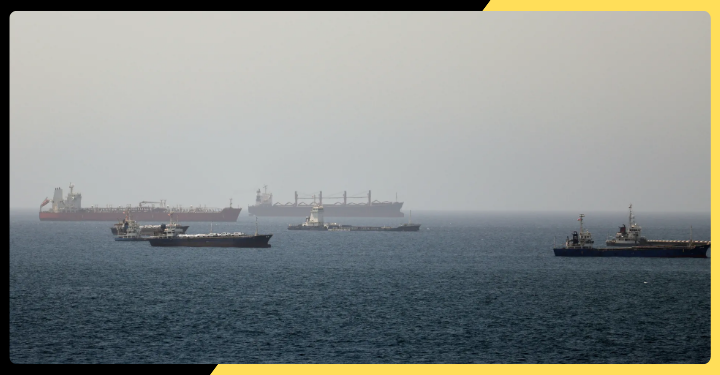
The White House describes several ways the network can operate. Some locations act as production hubs, where Chinese components may be assembled or finished. Others function mainly as logistics centres, offering ports, warehouses, re-export facilities and documentation services.
This distinction matters because legitimate global manufacturing often depends on components sourced from multiple countries. A smartphone, machine, vehicle or industrial product can contain parts manufactured in several different economies before final assembly.
The challenge for customs authorities is determining whether such international production represents genuine economic activity or simply an attempt to change a product’s apparent origin.
The White House says it wants to address that challenge using artificial intelligence. Its proposed “Detective Border” would analyse global trade data and search for unusual patterns in shipping routes, production capacity, invoices and declared origins.
The scale of the alleged problem is significant. The report estimates potentially illegal transhipment at roughly $60 billion. Reporting on the document also cites an estimate of approximately $67 billion in US-bound goods that were transhipped through China-linked hubs including Mexico, India and Vietnam in 2025, with potential tariff losses of about $28 billion.
The report also cites a broader scenario in which $75 billion in annual illegal transhipment could contribute to major economic losses in the United States. However, the White House notes that its job and GDP figures are modelled estimates and should not be interpreted as direct counts of confirmed losses.
India’s inclusion could have consequences for its growing export sector. Indian manufacturers increasingly want access to the US market, while American policymakers are demanding stronger controls against circumvention of tariffs.
For exporters, this could mean greater attention to certificates of origin, supplier information, manufacturing records and evidence of domestic value addition.
At the same time, India has an opportunity to distinguish its legitimate manufacturing sector from questionable trade practices. Clear customs procedures and transparent supply chains can help Indian companies avoid being caught in wider investigations involving Chinese suppliers.
The report also raises questions for policymakers. India is deeply connected to Asian supply chains, and Chinese components are present in numerous industries around the world. Completely separating legitimate manufacturing from China-linked trade would therefore be difficult.
The key issue is not simply whether a product has Chinese components, but whether those components and the manufacturing process comply with US customs and tariff rules.
For the Trump administration, the message is that tariffs will increasingly be enforced across supply chains rather than only at direct China-US borders. For India, the development underlines the importance of maintaining transparent trade practices while protecting its position as a growing global manufacturing and export hub.
The coming period could therefore see closer US scrutiny of shipments originating in India, particularly in sectors where Chinese inputs and American tariffs overlap. Whether that results in penalties or simply stronger compliance requirements will depend on future investigations and evidence.
What is already clear is that the US-China tariff conflict is no longer confined to Washington and Beijing. Countries such as India are increasingly being drawn into the debate because global supply chains connect their manufacturers, ports and exporters to both sides of the trade relationship.