
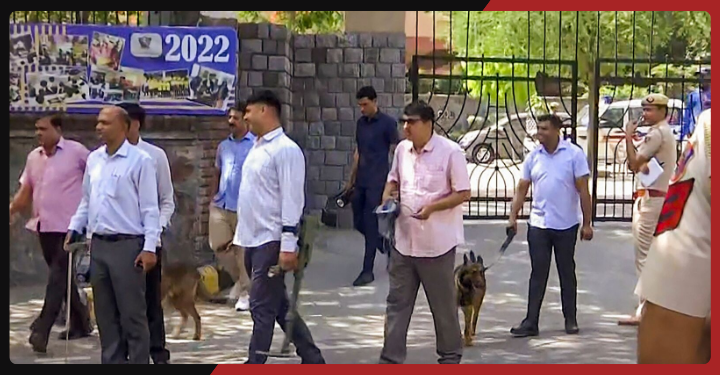
The Delhi High Court received a bomb threat on Friday, August 14, triggering a security response in the national capital just hours before India was due to celebrate Independence Day.
Thank you for reading this post, don't forget to subscribe!Reports indicate that the threatening communication was sent by email and reached the High Court at approximately 11:43 am. The message reportedly referred to the Red Fort and mentioned attackers wearing khaki clothing. Authorities responded by initiating security checks at the court premises.
The incident has attracted attention because the Red Fort is the centrepiece of India’s Independence Day ceremony. Every August 15, the Prime Minister addresses the nation from the historic monument. Consequently, the period immediately before the event involves extensive security preparations across Delhi.
A threat referring to the Red Fort therefore has to be examined carefully, even if there is no immediate evidence that an attack is actually being planned.
Security agencies follow a precautionary approach in such situations. When an institution receives a bomb threat, trained personnel inspect the premises and look for suspicious objects. Investigators simultaneously examine the communication itself and attempt to establish its source.
This process is important because threat messages can have different motivations. Some may represent genuine warnings, while others can be hoaxes designed to create fear, interrupt public activity or test security responses.
Delhi has seen repeated bomb-threat incidents in recent years. The High Court itself was evacuated after receiving a threatening email in September 2025. After bomb disposal teams and sniffer dogs searched the premises, authorities found nothing suspicious and later declared the threat a hoax.
Airports have also faced similar scares. In August 2021, an email warning of a possible attack at Delhi’s IGI Airport resulted in heightened security, although authorities assessed the threat as non-specific. Additional anti-sabotage checks and surveillance were nevertheless carried out.
These examples show why a threat can have significant consequences even when it turns out to be false.
Security agencies cannot simply ignore a message because previous threats have been hoaxes. Every communication must be assessed on its own circumstances. The cost of a precautionary search is considered preferable to the risk of overlooking a genuine danger.
The current situation also demonstrates how Independence Day affects everyday life in the capital. Security restrictions can lead to additional checking at public facilities, longer queues and greater police presence. Aviation operations may also be affected by special airspace restrictions around the national celebration. Official aviation information lists specific restrictions for August 15 in the Delhi region, with exemptions for certain categories of flights.
For the public, the key message is to remain alert without becoming alarmed. Citizens should report genuinely suspicious activity through appropriate channels but should not circulate unverified rumours or threatening messages.
Investigators will now work to determine the origin of the email and establish whether it was connected to any actual security risk. The language and references contained in the message may also be examined for clues about its purpose.
Meanwhile, security agencies are expected to continue their preparations for Independence Day. The objective is not only to protect the Red Fort ceremony but also to ensure the safety of millions of people across the capital.
The August 14 threat is therefore another test of Delhi’s security preparedness. Whether the message ultimately proves to be a hoax or something more serious, the response demonstrates why authorities maintain heightened vigilance before major national events.
As India prepares to mark Independence Day, the focus remains on ensuring that the celebrations proceed peacefully, while investigators continue their examination of the threatening communication received by the Delhi High Court.


