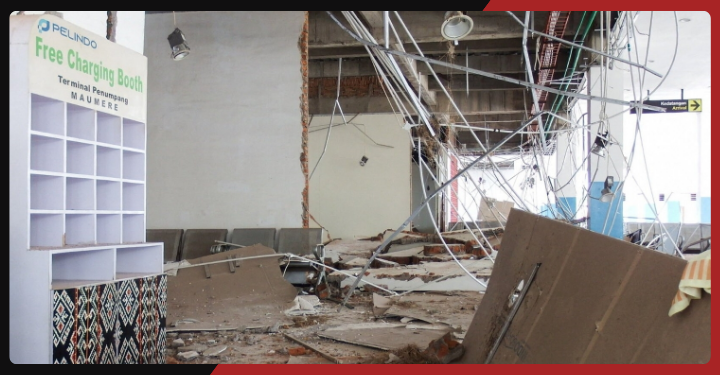
Rescue teams are continuing operations across Indonesia’s Flores Island after a powerful 7.7-magnitude earthquake killed at least 38 people and caused widespread destruction. The disaster began with an initial reported death toll of 20, but the figure increased as emergency teams reached additional areas.
Thank you for reading this post, don't forget to subscribe!The earthquake struck early Saturday morning off Flores in East Nusa Tenggara. The strong shaking damaged buildings, triggered landslides and cut power and communications in several communities.
Emergency workers immediately began searching collapsed structures. Some victims were found beneath rubble, while injured people were transported for treatment.
The rescue operation remains difficult because several roads have been blocked by landslides and damaged infrastructure. The Trans-Flores highway has been disrupted, limiting access to some communities.
Authorities have been preparing helicopters and other resources to reach areas that cannot easily be accessed by road.
The death toll remains a major concern. Emergency officials have warned that the number could increase because some affected locations are still difficult to reach. Communication problems also mean that authorities may not yet have complete information about casualties.
Around 2,000 residents have evacuated from affected communities. Many are staying away from damaged buildings because of the risk posed by aftershocks.
The earthquake also triggered a tsunami warning. Coastal communities were urged to move toward higher ground while authorities monitored sea conditions. The warning was later lifted after the immediate tsunami threat passed.
The combination of an earthquake, landslides and possible tsunami created a complicated emergency for authorities. Each threat required a different response, while damaged infrastructure made it difficult to move people and supplies.
Power outages have also complicated the situation. Electricity is essential for hospitals, communications, emergency coordination and basic services. Restoring power will therefore be an important part of the recovery effort.
The humanitarian situation could become more challenging if residents remain displaced for an extended period. Families whose homes have been destroyed or severely damaged will need temporary accommodation, food, clean water and medical support.
The disaster has also generated strong public concern because Flores is a densely inhabited and geographically challenging region. Indonesia’s location along the Pacific Ring of Fire means that communities regularly face earthquakes, but a quake of this magnitude can still cause extensive destruction.
Emergency officials are expected to continue searching damaged buildings and assessing infrastructure. The focus will gradually move from immediate rescue to relief and recovery once authorities have accounted for missing residents.
The latest earthquake is another reminder that disaster preparedness can save lives. Rapid evacuation, stronger buildings, accessible roads, reliable communication networks and public awareness can all reduce the human cost of future earthquakes.
For now, rescuers remain in the most dangerous areas, searching through rubble and landslide zones in the hope of finding survivors. Families continue waiting for news, while thousands of displaced residents face an uncertain night away from their homes.
The full impact of the Flores earthquake will become clearer only after rescue teams reach all affected communities. Until then, authorities remain focused on the urgent task of saving lives and helping survivors recover from one of the most destructive earthquakes to hit Indonesia in recent years.