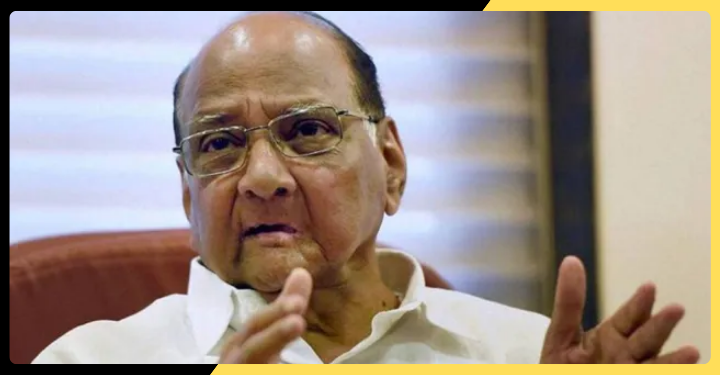
The Sharad Pawar-led Nationalist Congress Party (NCP) has embarked on a major organizational reset after announcing the dissolution of its entire panel of official spokespersons in a late-night decision that surprised political observers across Maharashtra. The move, which took immediate effect, is being seen as a significant step toward reshaping the party’s communication strategy and strengthening its internal functioning.
Thank you for reading this post, don't forget to subscribe!The announcement was made through an official statement issued by the party leadership, confirming that all spokesperson appointments had been withdrawn with immediate effect. While the statement did not specify the reasons behind the sweeping action, it indicated that the decision was part of an ongoing effort to reorganize the party and improve its overall efficiency.
The development comes at a politically significant time for the Sharad Pawar faction of the NCP. Since the split within the party, the leadership has been focused on rebuilding its organizational network, reinforcing its political identity, and maintaining strong connections with workers across Maharashtra. The latest decision reflects the leadership’s intention to fine-tune the party’s public communication as it prepares for future political challenges.
Political experts believe the move is aimed at establishing a more disciplined and centralized communication mechanism. In recent years, political communication has become increasingly complex, with television debates, digital platforms, and social media influencing public opinion around the clock. As a result, parties are placing greater emphasis on ensuring that official statements are consistent, timely, and aligned with the leadership’s strategic objectives.
According to party sources, the communication wing had been under review for several weeks. Senior leaders reportedly examined the effectiveness of the existing spokesperson system and concluded that a comprehensive restructuring would better serve the party’s long-term interests. Although there has been no official suggestion of disciplinary action against any individual, the leadership opted for a complete reorganization instead of making selective changes.
The decision has generated varied reactions from political observers. Some analysts view it as a proactive measure designed to strengthen the party’s organizational discipline and streamline media interactions. Others believe it reflects the evolving nature of political communication, where centralized decision-making has become increasingly important in managing public perception and responding to fast-moving developments.
Opposition parties were quick to react, with some leaders suggesting that the mass removal of spokespersons could point to internal disagreements or dissatisfaction within the organization. However, supporters of the Sharad Pawar-led faction dismissed such claims, arguing that organizational restructuring is a common feature of political parties seeking to improve efficiency and prepare for upcoming electoral contests.
Within the NCP, the response has largely been one of cautious optimism. District leaders and party workers have expressed confidence that the leadership’s decision is intended to strengthen the organization rather than create uncertainty. Many believe that a newly constituted spokesperson panel will provide an opportunity to introduce fresh faces while retaining experienced leaders capable of effectively communicating the party’s policies and political vision.
Political commentators note that the selection of the next spokesperson panel will be closely watched. The appointments are expected to reflect the party’s future priorities, including greater coordination, stronger media engagement, and broader representation from different regions of Maharashtra. Communication skills, political experience, subject knowledge, and organizational commitment are all likely to play important roles in determining the new team.
The timing of the restructuring is particularly significant given the rapidly changing political environment in Maharashtra. Frequent policy debates, alliance discussions, and election-related developments require parties to maintain clear and consistent communication with the public. A more streamlined spokesperson system could help the NCP respond more effectively to emerging issues while reinforcing its political messaging.
Until the new panel is announced, official statements are expected to be issued directly by senior leaders and authorized office-bearers. The leadership is likely to complete its review process before unveiling a revised communication structure designed to meet the demands of modern political engagement.
Sharad Pawar has built his political career on organizational discipline, strategic planning, and adaptability. The late-night decision to dissolve the entire spokesperson panel is consistent with that leadership style, emphasizing the importance of internal coordination and effective communication. As the party moves toward the next phase of its organizational journey, the restructuring is expected to play a key role in shaping how it presents itself to voters, engages with the media, and positions itself for future political contests.
The coming weeks will reveal the impact of this sweeping organizational reset, but for now, the decision stands out as one of the most significant internal developments within the Sharad Pawar-led NCP, signaling a renewed focus on unity, efficiency, and strategic communication.