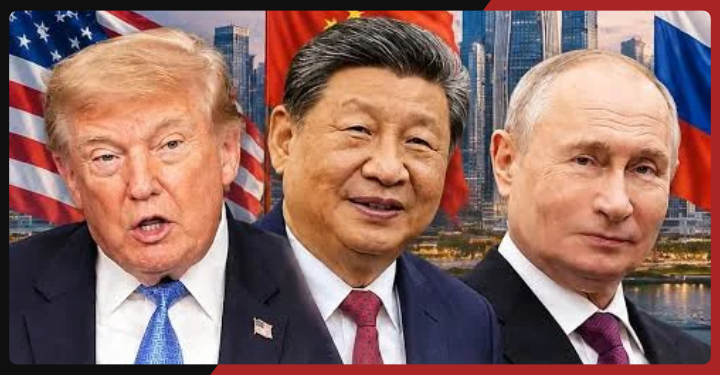
An unprecedented diplomatic meeting between US President Donald Trump, Chinese President Xi Jinping and Russian President Vladimir Putin could mark an important moment in the changing international political landscape.
Thank you for reading this post, don't forget to subscribe!The three leaders are expected to meet in Shenzhen, China, on November 19, during the Asia-Pacific Economic Cooperation summit. The gathering will bring together the heads of three major powers whose economic, military and political decisions influence countries across the world.
Although the summit is expected to focus on nuclear security and international conflicts, its wider significance could extend to the future balance of global power.
For decades, the United States has played a central role in international institutions and security arrangements. China has emerged as a major economic and military competitor, while Russia continues to exercise significant influence through its military capabilities, energy resources and diplomatic relationships.
Bringing these three leaders together creates an unusual diplomatic opportunity.
Trump is expected to use the meeting to discuss nuclear arms reduction. Following the expiration of the New START treaty in February 2026, Washington has been seeking a new agreement that would include China.
The proposal reflects growing American concerns about the expansion of China’s nuclear capabilities. However, Beijing has been reluctant to join a framework that would place it alongside countries with substantially larger nuclear stockpiles.
Russia also has an interest in future nuclear negotiations. Moscow has previously proposed extending the former agreement, but Trump has argued that a replacement should be more comprehensive and include additional participants.
The summit could therefore provide an opportunity to begin discussions about a new international security arrangement.
The war involving Iran is another issue that could influence the meeting. Trump intends to discuss the conflict with Xi and Putin, potentially opening a channel for conversations about regional stability and international security.
Meanwhile, Russia’s continuing war in Ukraine remains a major source of international tension. Although the White House has indicated that Ukraine will not be a central subject of the trilateral discussions, the conflict will remain relevant to the wider diplomatic environment.
Putin’s participation alongside Trump and Xi could strengthen Russia’s international diplomatic visibility. It would also demonstrate that Moscow continues to maintain direct communication with the leaders of the world’s other major powers.
For China, hosting the summit represents an opportunity to reinforce its international standing. Xi can demonstrate that Beijing is capable of maintaining relationships with countries that have competing interests.
Nevertheless, the meeting could also create concerns among America’s allies in Europe and Asia. Governments that are not represented at the table may worry that major international decisions could increasingly be shaped through private discussions between powerful countries.
The historical comparison with the Yalta Conference has already generated debate. Some observers fear that the three powers could develop an arrangement that gives them greater influence over international affairs.
However, the three countries do not share identical objectives. They have significant disagreements involving trade, technology, Taiwan, Ukraine, Iran and nuclear policy.
This makes the possibility of a comprehensive agreement difficult.
A senior American official has indicated that the trilateral meeting is expected to begin a conversation rather than produce an immediate nuclear agreement.
The importance of the summit will therefore depend on the quality of the discussions and whether the leaders agree to continue negotiations.
Even without a formal declaration, the meeting could become a defining diplomatic event of 2026. It may reveal how the world’s three major powers intend to manage competition, reduce security risks and respond to international conflicts.
For the rest of the world, the central question will be whether this historic gathering strengthens international cooperation or creates a new era of major-power rivalry.