Delhi’s voter-list controversy has taken a new turn with reports that nearly 1.1 million voters had their names deleted between January 2025 and June 2026—before the Special Intensive Revision exercise even began.
Thank you for reading this post, don't forget to subscribe!The revelation has added another dimension to the already intense debate surrounding Delhi’s electoral rolls.
The SIR exercise has attracted national attention because of the massive number of names excluded from the draft list. But the discovery that nearly 11 lakh names had already disappeared before SIR began raises a separate question: How many voters knew that they had been removed?
According to recent reporting, many did not.
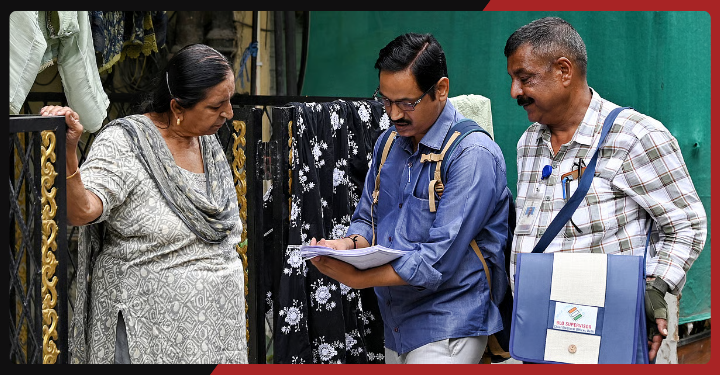
Some voters reportedly learned about the deletion only after the SIR enumeration process began. Their family members received Enumeration Forms, while they did not.
When they investigated the reason, they discovered that their names were no longer part of the electoral roll.
This is significant because SIR was designed as a large-scale verification exercise.
If a voter was already absent from the electoral database before the exercise started, that person could face difficulties participating through the standard enumeration process.
Reports indicated that forms were not automatically generated for voters who had already been deleted, potentially leaving them outside the normal system followed by Booth Level Officers.
The Election Commission’s stated objective in conducting intensive revision exercises is to maintain accurate electoral rolls while ensuring that eligible voters are not excluded. The process includes verification and opportunities for citizens to file claims and objections.
But the Delhi controversy demonstrates why the period before a major revision is also important.
Routine voter-list deletions can have major consequences if citizens are not aware of them.
A person may continue living at the same address and assume that everything is normal. Months later, when an election or verification exercise arrives, the individual may suddenly discover that they are no longer registered.
This can create frustration and distrust.
The issue has become even more sensitive because Delhi’s SIR draft roll itself showed a dramatic fall in the number of electors.
From around 1.45 crore voters before the exercise, the draft roll listed approximately 97.53 lakh electors. Around 47.56 lakh names were excluded, representing nearly one-third of the earlier electorate. Authorities have linked these exclusions to categories including permanently shifted voters, absent voters, deceased voters and duplicate registrations.
Political parties have debated the implications of these numbers.
However, the most important question for ordinary citizens remains practical: Is my name on the voter list?
The controversy over the nearly 11 lakh pre-SIR deletions may encourage more Delhi residents to check their electoral status regularly through official channels such as the Chief Electoral Officer’s website.
The episode also underlines the importance of stronger communication.
Direct notifications, accessible grievance systems and clear explanations for deletion could help prevent eligible voters from being caught unaware.
Democracy depends on participation, and participation begins with registration.
A clean voter list is necessary for credible elections. But ensuring that every eligible voter has a fair opportunity to remain on that list is just as important.
The nearly 1.1 million deletions before Delhi’s SIR process have therefore become more than a statistical issue. They have opened a wider debate about transparency, voter awareness and the responsibility of election authorities to ensure that no eligible citizen disappears from the democratic process without knowing it.