
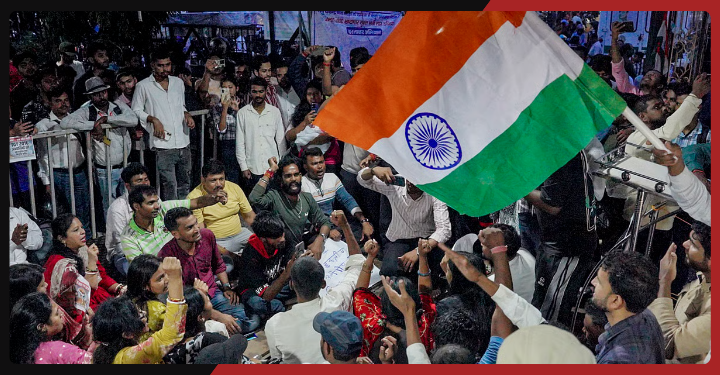
The Jharkhand government’s attempt to resolve the student protest through dialogue has so far failed to deliver a final agreement, leaving the dispute over alleged recruitment examination irregularities unresolved.
Thank you for reading this post, don't forget to subscribe!The latest talks were part of a broader effort by the state government to negotiate with students protesting against the functioning of recruitment examinations conducted by JPSC and JSSC.
The government has repeatedly stated that it is prepared to examine the concerns raised by aspirants. A special ministerial panel has been conducting discussions with different student organisations, while officials have also invited suggestions for reforming the examination system.
But students have maintained that their protest will continue until concrete decisions are taken.
The distinction between assurances and formal action has become central to the dispute. Student leaders say that discussions cannot resolve the issue unless the government issues orders addressing specific demands.
The agitation has been continuing in Ranchi, where students have gathered at Jaipal Singh Stadium. The protest has entered its 16th day, according to the latest government-related reporting.
One of the most serious developments has been the indefinite hunger strike by student leader Devendra Nath Mahto. His health condition reportedly deteriorated on Sunday, with his blood glucose level recorded at 53. The development has increased concern among protesters and placed additional pressure on authorities.
The negotiations have involved several student organisations.
The JPSC-JSSC Reforms Manch has been at the centre of the agitation. Other groups, including NSUI, Jharkhand Chhatra Morcha and Adivasi Chhatra Sangh, have also participated in discussions with the government.
Their demands include cancellation of the 14th JPSC Civil Services Examination, investigations into examinations suspected of irregularities, cancellation of tests where irregularities are established and reforms to the overall recruitment process.
NSUI has proposed the establishment of a Jharkhand Testing Agency. The idea is aimed at creating a dedicated state-level mechanism for conducting examinations.
The Adivasi Chhatra Sangh has also raised the issue of tribal and regional languages and called for their inclusion as qualifying papers in recruitment examinations.
The government has responded by saying that it is committed to comprehensive reforms. It has established an email address through which aspirants and stakeholders can send recommendations regarding the examination system.
However, the continuing protest shows that the government’s assurances have not yet satisfied the main protest leadership.
The dispute has also entered the political arena. Union Minister Annapurna Devi has demanded the resignation of Chief Minister Hemant Soren over the examination controversy.
Separately, authorities are investigating the allegations surrounding the examinations. Reports indicate that 19 people have been arrested in connection with alleged JPSC examination irregularities. Former commission chairperson L Khiangte has also been questioned several times.
The protesters have announced an Assembly march if their demands remain unresolved. Other student groups have also announced separate programmes, indicating that mobilisation around the issue is continuing.
The situation therefore remains fluid.
The government has opened the door to dialogue and reform, while students are demanding decisions that they can see and verify. Whether the next round of negotiations can bridge that gap will determine whether the protest moves towards resolution or enters another phase of escalation.
For now, the second round of talks has not ended the deadlock. The students remain on the streets, the investigation continues, and the Jharkhand government faces growing pressure to provide a definitive response to the examination controversy.


