The continuing student agitation in Jharkhand presents a difficult challenge for the state government. On one side, Chief Minister Hemant Soren has promised reforms and greater transparency in recruitment examinations. On the other, student protesters say government action has not gone far enough and have announced increasingly aggressive programmes, including effigy burning and a proposed August 20 gherao of the Chief Minister’s residence.
Thank you for reading this post, don't forget to subscribe!The dispute revolves around alleged irregularities in examinations conducted by JPSC and JSSC. Students argue that recruitment processes must be fair and transparent because government examinations determine the careers of thousands of young candidates.
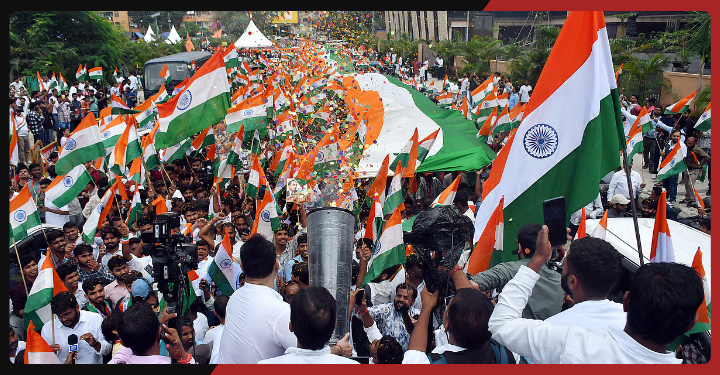
The controversy gained significant momentum in late July when thousands of students marched through Ranchi. They demanded cancellation of the 14th JPSC preliminary examination and called for a CBI investigation into alleged irregularities.
The movement subsequently expanded.
Students organised sit-ins and hunger strikes, while repeated marches brought large crowds onto the streets. The agitation eventually reached the state legislature, where clashes took place between protesters and police on August 10. Reuters reported that police used tear gas, batons and water cannon after tensions escalated.
The state government has attempted to demonstrate that it is responding.
Soren announced the cancellation of the 14th JPSC civil services examination and said that two other JPSC examinations would also be scrapped. The government additionally announced an investigation into examinations conducted by TDPL.
The Chief Minister has also publicly emphasised his commitment to examination reform. According to recent reporting, Soren has said that transparency will be strengthened and that young talent should not be harmed by malpractice or irregularities.
The continuing protest shows that students are not satisfied with these measures alone.
Their demands have increasingly focused on institutional accountability. They want assurances that the recruitment system itself will be changed and that allegations relating to previous examinations will be investigated properly.
The government’s challenge is to convert political assurances into measurable action.
For example, students are likely to ask who will investigate disputed examinations, how investigations will be conducted, what safeguards will be introduced and when reforms will take effect. These questions require detailed administrative answers rather than general statements.
The August 20 gherao threat adds urgency.
A demonstration outside the Chief Minister’s residence would carry considerable political symbolism. It would indicate that students believe the dispute can only be resolved through direct pressure on the government’s top leadership.
However, the administration must also ensure that the protest does not become violent.
The August 10 confrontation shows that tensions are already high. A large gathering around a sensitive government location could create further friction if protesters attempt to breach security barriers.
Dialogue could therefore be the most important tool available to both sides.
Earlier in the agitation, government officials approached protesters and the Chief Minister invited representatives for discussions. The existence of this communication channel could provide a path toward resolving at least some of the differences.
For talks to succeed, however, both sides will need to compromise.
The government must be prepared to listen to students and provide specific information. Protesters, meanwhile, must ensure that demonstrations remain peaceful and that their demands remain clearly defined.
Political involvement is another factor.
Opposition BJP leaders have already criticised the government over recruitment controversies and demanded a CBI investigation. Meanwhile, protesters’ announced plan to burn Rahul Gandhi’s effigy shows that criticism is extending to Congress as part of the ruling alliance.
This could make the controversy increasingly political ahead of future electoral battles.
But the recruitment issue should not be reduced to party politics. The underlying concerns affect students regardless of political affiliation. The credibility of examination institutions is a public-interest matter.
If the government succeeds in implementing meaningful reforms, the current crisis could eventually become an opportunity to strengthen Jharkhand’s recruitment system. If it fails, continued protests could deepen distrust among young job seekers.
The August 20 deadline is therefore more than another protest date. It represents a test of whether the government’s promises can be translated into enough confidence to prevent another confrontation.
For Jharkhand’s students, the message remains consistent: they want recruitment examinations to be transparent, credible and fair.
For the government, the task is equally clear: demonstrate that those expectations can be met through institutional action rather than political statements alone.