
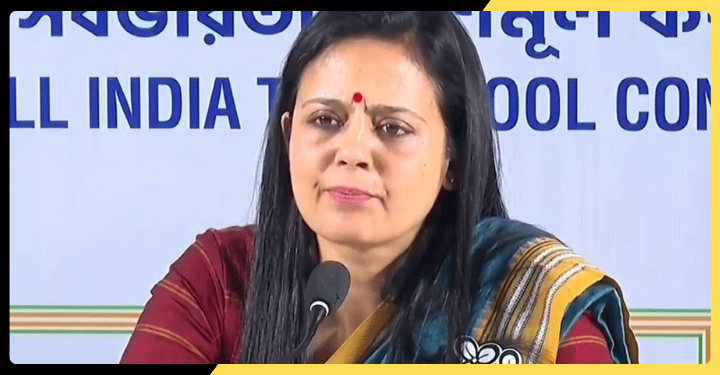
Trinamool Congress (TMC) leader Mahua Moitra has strongly reiterated that Mamata Banerjee remains the foundation of the party, emphasizing that the organization’s credibility, public trust, and political achievements are deeply rooted in her leadership. The statement comes amid renewed discussions about the future of regional political parties and the importance of leadership in maintaining organizational unity and electoral success.
Thank you for reading this post, don't forget to subscribe!Moitra’s remarks underline the significant role Banerjee has played in building the Trinamool Congress from a fledgling regional outfit into one of the most powerful political parties in eastern India. Over the past two decades, Banerjee has become synonymous with the party itself, with many supporters viewing her as the architect of its growth and the driving force behind its victories.
The origins of the Trinamool Congress can be traced back to 1998 when Mamata Banerjee broke away from the Indian National Congress to establish a new political platform. At the time, the political environment in West Bengal was dominated by the Left Front government, which had maintained a strong hold on power for decades. Banerjee’s decision to form a separate party was considered a bold and challenging step.
Despite the obstacles, Banerjee gradually built a strong support base through grassroots campaigns and direct engagement with the people. Her political style focused on addressing local concerns, highlighting governance issues, and mobilizing citizens around regional aspirations. This approach helped the TMC gain momentum and eventually emerge as a credible alternative to the existing political establishment.
The defining moment in the party’s journey came in 2011 when the Trinamool Congress secured a historic victory in the West Bengal Assembly elections. The result ended the Left Front’s 34-year rule and marked a major political transformation in the state. Banerjee’s leadership during this period was widely credited for the party’s success and remains a central part of its political narrative.
According to Moitra, the trust that voters place in the TMC is closely linked to the confidence they have in Banerjee. She argued that the party’s legitimacy comes not only from its electoral performance but also from the reputation and credibility of its leader. This perspective reflects a broader belief among party members that Banerjee’s leadership continues to be one of the organization’s greatest strengths.
Political experts often point out that strong leaders can play a crucial role in defining a party’s identity. In the case of the Trinamool Congress, Banerjee’s image as a grassroots leader and advocate for ordinary citizens has become deeply embedded in the party’s brand. Her personal political journey is often seen as a reflection of the values and principles the organization seeks to represent.
Mahua Moitra’s endorsement of Banerjee is significant because of her own prominence within the party. As one of the TMC’s most visible leaders at the national level, Moitra frequently represents the party’s position on key political issues. Her statements are therefore closely watched by both supporters and political observers.
The remarks also come at a time when many political parties across India are facing questions about leadership succession and organizational stability. In such circumstances, public declarations of support for established leaders often serve to reinforce confidence among party workers and voters. Moitra’s comments appear aimed at emphasizing continuity and unity within the Trinamool Congress.
Supporters of Banerjee argue that her success stems from her ability to maintain a close connection with the public. Unlike leaders who rely heavily on organizational hierarchies, she has consistently focused on direct interaction with citizens. This approach has helped her build strong personal support and maintain political relevance over the years.
The Trinamool Congress has also expanded its ambitions beyond West Bengal. While the state remains its primary focus, the party has increasingly sought to participate in national political discussions and broaden its influence. Banerjee’s stature as a nationally recognized leader has played a key role in these efforts, providing the party with visibility and credibility beyond its traditional base.
Moitra’s remarks highlight the importance of preserving the values and vision that have guided the party since its formation. She suggested that Banerjee’s leadership remains essential not only for maintaining unity but also for ensuring that the organization continues to pursue its long-term goals.
As the political landscape continues to evolve, the TMC faces both opportunities and challenges. Electoral competition is becoming more intense, and voter expectations are changing rapidly. In this environment, leadership will remain a critical factor in determining the party’s future success.
Ultimately, Mahua Moitra’s statement reinforces the view that Mamata Banerjee remains the foundation upon which the Trinamool Congress has been built. Her leadership has shaped the party’s history, influenced its present direction, and continues to guide its future ambitions. For many within the organization, Banerjee remains the central figure whose vision and determination define the essence of the TMC.


