
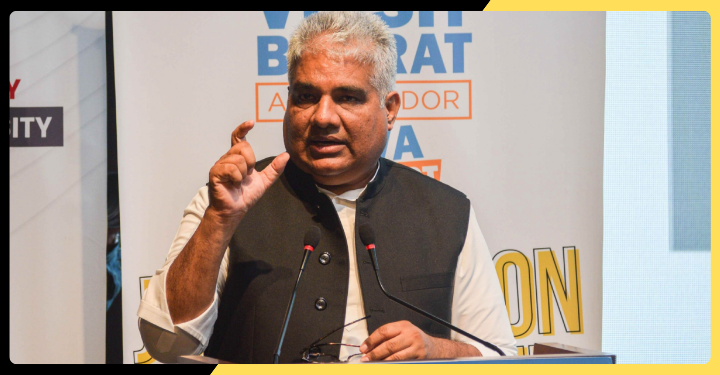
A fresh round of high-level bureaucratic changes has marked a new phase in the functioning of Union Minister Bhupender Yadav’s office, with the removal of his Private Secretary and two Additional Private Secretaries. The administrative reshuffle has become a subject of discussion within government circles, highlighting the importance of periodic reviews of ministerial support staff in ensuring effective governance.
Thank you for reading this post, don't forget to subscribe!According to officials familiar with administrative procedures, the personnel changes are part of a broader effort to strengthen institutional efficiency within ministerial offices. While the government has not issued an official statement explaining the reasons behind the move, such reorganizations are considered a routine feature of the administrative system and are carried out across ministries from time to time.
A Union Minister’s office serves as the primary centre for official coordination, policy communication, and administrative management. The minister depends on a dedicated team of officers to organize daily engagements, process confidential documents, coordinate with senior bureaucrats, prepare official briefings, and facilitate communication with various government departments. Any restructuring within this team is therefore closely watched because of its role in supporting the minister’s responsibilities.
The Private Secretary occupies one of the most significant positions in the minister’s personal establishment. The officer is responsible for managing the minister’s official calendar, coordinating meetings with government officials and stakeholders, supervising confidential correspondence, and ensuring that important files reach the minister without delay. The position demands a high level of administrative expertise, discretion, and organizational ability.
Supporting the Private Secretary are the Additional Private Secretaries, who assist in handling official paperwork, coordinating with different departments, preparing briefing materials, monitoring pending matters, and ensuring smooth communication between the minister’s office and various government agencies. Their contribution is essential to maintaining an efficient administrative system capable of responding to the demands of modern governance.
Officials have stressed that the ministry’s work continues without interruption despite the recent changes. Interim arrangements have been made to ensure that official responsibilities are carried out smoothly while the government completes the process of appointing new officers to the vacant positions. Routine activities, including departmental coordination, policy discussions, parliamentary work, and official meetings, remain on schedule.
Bhupender Yadav is entrusted with significant responsibilities in the Union Government, requiring continuous interaction with ministries, state governments, regulatory authorities, and other public institutions. His office plays a central role in coordinating these engagements while supporting the implementation of government policies and programmes. A well-functioning administrative team is therefore considered indispensable for ensuring effective governance.
Experts in public administration note that staff restructuring is an established practice within the civil service. Officers are periodically transferred or reassigned to different ministries based on administrative requirements, tenure policies, or organizational needs. These movements help broaden officers’ experience, strengthen institutional capacity, and introduce fresh approaches to administrative management.
The latest changes also reflect the government’s emphasis on improving efficiency within ministerial offices. Regular administrative reviews enable departments to identify areas where coordination can be strengthened, workflows improved, and service delivery enhanced. Bringing experienced officers into key support positions is often viewed as an opportunity to reinforce governance standards and improve operational effectiveness.
Political analysts have pointed out that personnel changes within ministerial offices should not automatically be interpreted as indicators of political developments. Administrative reshuffles occur frequently within government and are generally driven by service requirements rather than policy disagreements or political considerations. Without an official explanation, the current changes remain an administrative matter.
Government sources indicate that the appointment of new officers is expected in the near future. The incoming Private Secretary and Additional Private Secretaries will be responsible for managing the minister’s official engagements, coordinating with government departments, overseeing administrative processes, and ensuring continuity in the functioning of the minister’s office.
The latest bureaucratic reshuffle underscores the importance of maintaining a dynamic and responsive administrative structure capable of meeting evolving governance challenges. As new appointments are finalized, the reorganized ministerial office is expected to continue supporting Bhupender Yadav’s responsibilities with renewed focus on efficiency, coordination, transparency, and effective public administration. The transition represents another example of the government’s ongoing efforts to strengthen institutional functioning while ensuring that official work proceeds smoothly and without disruption.


