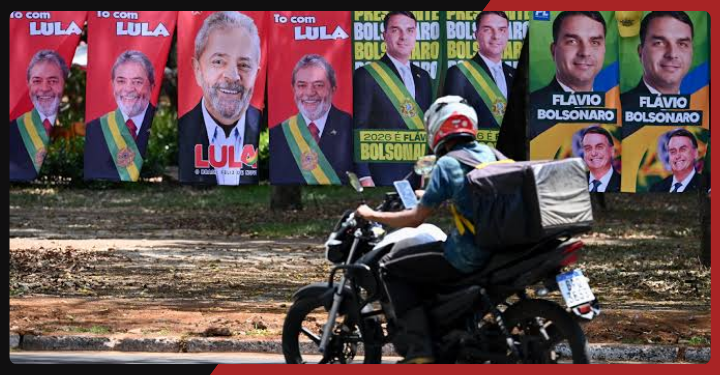
Brazil appears headed for a high-stakes presidential runoff after projections showed Jair Bolsonaro’s lead narrowing during the vote count.
Thank you for reading this post, don't forget to subscribe!The development means the country may have to wait for a second round before determining its next president. The election has already produced a highly competitive contest, and the prospect of a runoff is likely to intensify political activity in the coming days.
Bolsonaro’s political strength was evident from the early projections. His conservative support base gave him a strong position, but the narrowing margin showed that his advantage was not sufficient to guarantee a first-round victory.
A runoff would place Bolsonaro directly against his strongest rival and eliminate the other candidates from the presidential race.
That could fundamentally change the dynamics of the election.
During the first round, candidates compete for support across a broad political spectrum. In a runoff, the two finalists must appeal to a much larger and more diverse group of voters.
That makes coalition-building essential.
Bolsonaro could seek support from other conservative political groups, while his opponent would likely attempt to attract voters who want to prevent Bolsonaro from returning to the presidency.
The political battle could become particularly intense because Brazil remains deeply divided over Bolsonaro’s legacy and political agenda.
Supporters praise his conservative approach and positions on crime, economic policy and social issues. Critics argue that his political style has contributed to polarization and institutional conflict.
Those competing perceptions will likely remain central to the campaign.
Economic policy could become one of the most important issues. Voters will want to know how each candidate plans to address employment, inflation, public spending and economic growth.
The candidates will also face questions about government programs and public services.
Crime and security are likely to remain prominent as well. Bolsonaro has historically made public safety a major part of his political message, while opponents have promoted alternative approaches.
Brazil’s environmental policies could also influence the international response to the election. The country’s role in protecting the Amazon rainforest makes presidential decisions important to global climate efforts.
The election will also have consequences for Brazil’s diplomatic position. As South America’s largest country and economy, Brazil plays an important role in regional politics and international negotiations.
Investors will be watching for signs of how the next government might manage the economy and public finances.
Despite the political excitement surrounding the projections, the final first-round result cannot be determined until the official count is completed.
The narrowing lead is a reminder that election-night projections are not the same as certified results.
If a runoff is officially confirmed, both campaigns will immediately face a new challenge: winning over voters who did not support either finalist in the first round.
Endorsements from defeated candidates could influence the political conversation, but the ultimate decision will rest with voters.
The second round could therefore become a referendum on Bolsonaro’s political record as well as a broader debate over Brazil’s future direction.
For now, the election remains unresolved. Bolsonaro’s narrowing lead has made a first-round victory less likely and increased the prospect of another decisive vote.
Brazil’s presidential race is therefore entering what could be its most consequential stage yet, with voters potentially returning to the polls to determine who will lead the country.