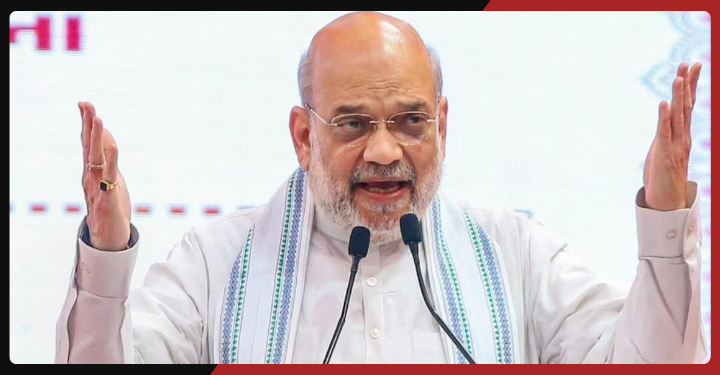
The Centre has offered Union Home Minister Amit Shah an opportunity to address Parliament on the Delhi student protest crackdown, but the proposed statement is tied to a condition: Opposition parties must cooperate in keeping parliamentary proceedings running smoothly.
Thank you for reading this post, don't forget to subscribe!The announcement comes at a time when Parliament is facing repeated disruptions over the government’s handling of the student protests. Opposition MPs have demanded answers from the Centre over the police action during the July 20 march in Delhi.
The protest had attracted significant attention after demonstrators attempted to move towards Parliament. Police and security forces intervened, with tear gas being used to disperse protesters. Videos from the incident showed clashes between security personnel and demonstrators, triggering a political backlash.
Questions were also raised over the presence of policemen in civilian clothing. Delhi Police subsequently confirmed that some plainclothes personnel had been deployed for law-and-order duties. Their presence became a major point of criticism because of concerns over identification and accountability during the operation.
Opposition parties have argued that Amit Shah should personally answer questions about the crackdown. Rahul Gandhi has written to the Home Minister seeking accountability and questioning the use of force against protesters.
The government, however, has rejected the allegation that the police action was directly ordered by a minister. Its position is that operational decisions were taken by the relevant police and administrative authorities.
The disagreement has created a difficult situation in Parliament. The Opposition wants the government to address what it considers a serious issue of accountability. The Centre wants the issue discussed through Parliament but does not want continued disruptions to prevent other legislative business.
Kiren Rijiju’s announcement that Amit Shah is prepared to speak represents the government’s latest attempt to bridge that gap. But the condition attached to the offer is significant. The Centre wants Opposition MPs to allow the House to function and avoid disruptions during the proceedings.
The Opposition has not accepted the government’s position as a complete solution. Its leaders have continued to raise demands connected to the crackdown and other issues, arguing that accountability must come before normalisation of proceedings.
The Speaker has also appealed for an end to the protests inside Parliament. Om Birla has urged opposition parties to allow the House to conduct its business, highlighting the growing concern over repeated disruptions.
Another complication has been the circulation of unverified information about the police action. A viral video falsely suggested that a Delhi Police official had said Amit Shah ordered the crackdown to continue at any cost. Fact-checkers established that the footage had been manipulated and that the original official statement was an appeal for peace and restraint.
The proposed statement by Amit Shah could therefore be important in establishing the government’s official version of the incident. It could address questions about the police response, the chain of administrative responsibility and the allegations of excessive force.
For the Opposition, the statement could provide an opportunity to question the Home Minister directly.
For the government, it could demonstrate that it is willing to face Parliament on the issue while insisting that legislative proceedings should not be paralysed.
The outcome will depend largely on whether both sides can agree on the terms of the discussion. If Opposition parties agree to maintain order, Amit Shah could address Parliament and potentially provide answers to some of the questions surrounding the Delhi crackdown.
If the standoff continues, however, the issue is likely to remain a major source of disruption during the Monsoon Session.
The political significance of the controversy now extends beyond the original protest. It has become a test of how the government responds to allegations of excessive police force and how the Opposition uses parliamentary protest to demand accountability.