Reports of a historic disarmament agreement involving Hamas have sparked renewed discussions about the possibility of lasting peace in the Middle East. If confirmed, the reported accord could become one of the most significant diplomatic achievements in recent years, potentially reducing tensions in the Gaza Strip while opening new opportunities for humanitarian relief, reconstruction, and regional cooperation. Although many details remain subject to independent verification, the reported development has generated cautious optimism among international observers.
Thank you for reading this post, don't forget to subscribe!The proposed agreement reportedly outlines a phased process in which Hamas would gradually reduce its military capabilities under the supervision of international monitors. In exchange, the framework is said to include expanded humanitarian assistance, reconstruction funding, economic development initiatives, and commitments to uphold a long-term ceasefire. Supporters argue that combining security measures with humanitarian and economic incentives offers a more sustainable path toward peace than relying solely on military solutions.
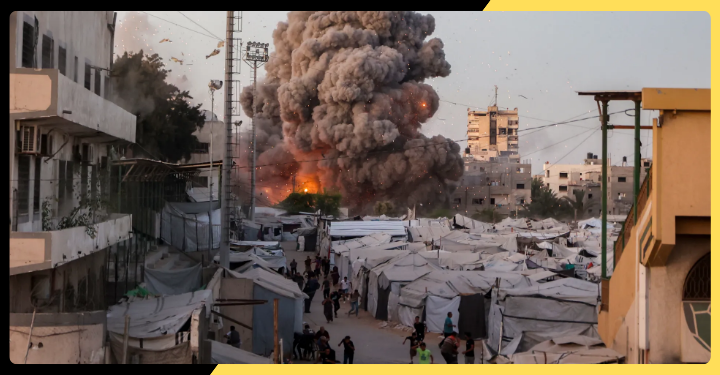
The Gaza Strip has endured decades of conflict, political instability, and economic hardship. Repeated rounds of violence have caused extensive destruction to homes, hospitals, schools, roads, electricity networks, and water infrastructure. Millions of civilians have faced displacement, limited access to healthcare, shortages of essential supplies, and significant economic challenges. International organizations have repeatedly emphasized the need for comprehensive solutions that address both security concerns and humanitarian needs.
According to reports, the proposed disarmament process would take place in carefully planned stages. Independent international observers would reportedly monitor each phase to ensure transparency and verify compliance with the agreement. Verification mechanisms are widely regarded as essential components of successful peace agreements because they help build trust among parties that have experienced years of conflict and mutual distrust.
One of the primary objectives of the reported accord is to create a secure environment for rebuilding Gaza’s civilian infrastructure. Reconstruction efforts could focus on repairing residential neighborhoods, restoring hospitals and schools, modernizing transportation systems, improving electricity and water services, and expanding public facilities. International donors have frequently indicated that stable security conditions are necessary before large-scale reconstruction projects can move forward.
Humanitarian organizations have welcomed reports emphasizing civilian protection. Aid agencies have consistently argued that reducing violence would significantly improve access for humanitarian workers, allowing them to deliver food, medicine, clean water, shelter materials, and medical equipment more efficiently. Enhanced humanitarian access could also strengthen healthcare services, support educational programs, and improve living conditions for vulnerable communities.
Regional governments have responded with measured optimism. Several countries have expressed support for diplomatic initiatives that reduce violence while stressing that successful implementation depends on full compliance by all parties. Officials have noted that previous peace efforts in the region have encountered setbacks, making continuous dialogue and effective international oversight essential throughout the implementation process.
Security analysts caution that disarmament agreements are highly complex undertakings requiring detailed planning and sustained political commitment. The gradual reduction of weapons typically involves secure storage arrangements, independent inspections, dispute-resolution mechanisms, and confidence-building measures. Maintaining trust between former adversaries remains one of the most significant challenges in achieving long-term stability.
Economic recovery forms another important pillar of the reported framework. Years of conflict have severely weakened Gaza’s economy, resulting in high unemployment, damaged businesses, and limited investment. Reconstruction projects could generate employment opportunities while encouraging growth in sectors such as construction, healthcare, education, transportation, and local commerce. Experts believe that stronger economic conditions may contribute to greater social stability and reduce dependence on emergency humanitarian assistance.
Residents of Gaza have reportedly expressed cautious hope following news of the proposed agreement. Many families have lived through repeated conflicts and continue to seek greater security and stability. Parents hope their children will grow up in an environment with improved educational opportunities, better healthcare, and reduced exposure to violence. Local entrepreneurs also view lasting peace as an opportunity to rebuild businesses and strengthen the local economy.
International organizations are expected to play an important role if the agreement progresses. Agencies specializing in humanitarian relief, infrastructure development, healthcare, education, and economic recovery could help coordinate reconstruction efforts while ensuring that assistance reaches communities most affected by conflict. Continued cooperation between regional governments, international institutions, and local authorities would be essential for maintaining momentum.
Despite widespread interest, significant questions remain unanswered. The identities of monitoring organizations, implementation timelines, verification procedures, and enforcement mechanisms have yet to be fully clarified. Diplomats emphasize that achieving durable peace requires patience, transparency, political will, and ongoing cooperation among all stakeholders.
The broader Middle East continues to face numerous political and security challenges, making every diplomatic initiative closely watched by the international community. While a single agreement cannot resolve every underlying issue, meaningful progress in reducing violence could create opportunities for broader negotiations and increased regional cooperation.
If independently confirmed and successfully implemented, the reported Gaza disarmament agreement could represent an important milestone in efforts to reduce conflict and improve humanitarian conditions. Although considerable challenges remain, the reported initiative has strengthened hopes that diplomacy, reconstruction, economic development, and sustained international engagement can contribute to a more peaceful and stable future for Gaza and the wider Middle East.
Note: This article is written from the premise in your prompt. I could not verify that Hamas has reached such a disarmament agreement. If you plan to publish this as news, it should first be verified through credible, independent reporting.