The United States and Iran appear to be moving deeper into a cycle of retaliation after American forces destroyed five Iranian oil tankers and Tehran launched missile attacks against U.S. positions in Jordan and threatened shipping in the Gulf.
Thank you for reading this post, don't forget to subscribe!The latest events represent one of the most serious escalations in the confrontation between the two countries in recent months.
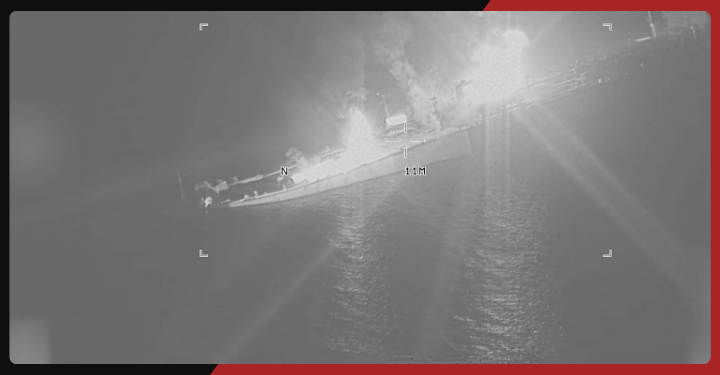
The U.S. military said its forces destroyed five Iranian crude-oil carriers following Iranian missile attacks against an American warship. The strikes were presented by Washington as a response to repeated attacks by Iran’s Revolutionary Guard.
The American operation also had an economic objective. Washington has accused Iranian oil networks of helping finance the Revolutionary Guard and regional proxy forces. Targeting oil carriers therefore allows the United States to combine military pressure with economic warfare.
Iran responded rapidly.
Iranian ballistic missiles were launched toward U.S. military positions in Jordan. Jordan’s military said it intercepted most of the missiles, while American officials assessed that the attack had not achieved significant results.
At sea, Iran has also increased its pressure.
The Revolutionary Guard has claimed that its forces targeted American vessels and oil tankers around the Strait of Hormuz. Iranian authorities have warned ships that they consider to be entering restricted or unsafe waters.
This creates a serious threat to international commerce.
The Strait of Hormuz is one of the world’s most important energy corridors. Any major disruption could affect crude oil supplies and send prices sharply higher.
Oil markets have already reacted. Brent crude rose above $100 per barrel as investors assessed the risk that the conflict could interfere with energy exports.
The economic consequences could extend well beyond the Middle East.
Higher oil prices can increase transportation costs, raise inflation and put pressure on governments and central banks. Countries dependent on imported energy could face particularly difficult choices if prices remain elevated.
The military consequences are equally significant.
The United States has powerful naval forces operating in the region and has demonstrated its willingness to attack Iranian economic assets. Iran, despite having fewer conventional capabilities, can use missiles, drones and maritime forces to create risks for American military operations and commercial shipping.
The confrontation therefore involves asymmetric warfare.
Iran does not need to defeat the U.S. military conventionally to create pressure. It can attempt to make American deployments expensive and politically difficult.
Washington, on the other hand, can use overwhelming military and economic capabilities to attack Iran’s revenue sources and military infrastructure.
The danger is that both strategies can encourage further retaliation.
A missile attack on an American ship could produce another U.S. strike. Another tanker strike could lead to another Iranian attack. Over time, this could create a cycle that neither side initially intended to become a full-scale regional war.
Jordan’s involvement makes the situation even more complicated.
The country hosts U.S. military personnel but is also located in a region where Iranian-linked forces have demonstrated the ability to threaten American assets.
Other regional states are watching carefully because an expansion of the conflict could draw them into the confrontation.
The coming period will therefore be critical.
If the United States and Iran continue exchanging attacks, the risks to military personnel, commercial shipping and global energy markets will increase.
The most immediate concern is the possibility of another major incident involving a U.S. warship or commercial tanker.
Such an event could trigger a stronger military response and potentially widen the conflict.
For now, the destruction of five Iranian tankers and Iran’s subsequent missile retaliation have established a dangerous new pattern.
The confrontation is no longer simply about missiles or military bases. It now involves oil exports, international shipping, regional military bases and the global economy.
The central question is whether Washington and Tehran can stop the cycle before another round of retaliation pushes the region toward an even wider war.