
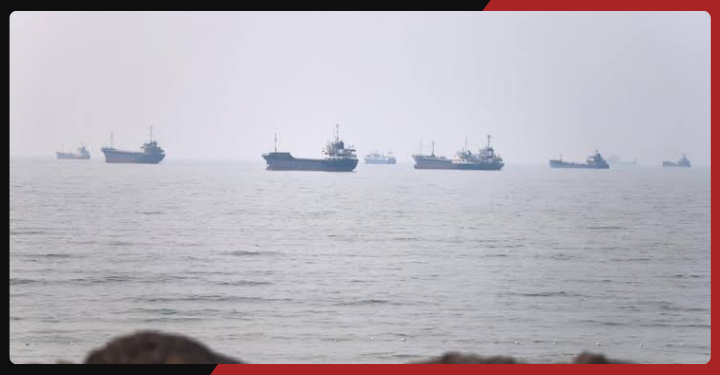
The prospect of improved stability in the Middle East has gained fresh momentum after Iran confirmed that its negotiations with Oman over a key agreement concerning the Strait of Hormuz are in their final stages. The announcement comes at a time when former U.S. President Donald Trump has also expressed optimism about diplomatic progress in the Gulf, suggesting that a significant breakthrough could be on the horizon. Although the final details of the agreement have not yet been made public, international observers believe the proposed accord could play a major role in reducing tensions and strengthening security in one of the world’s most strategically important maritime regions.
Thank you for reading this post, don't forget to subscribe!The Strait of Hormuz is often described as the world’s most critical energy corridor. Located between Iran to the north and Oman to the south, the narrow waterway connects the Persian Gulf with the Gulf of Oman and the Arabian Sea. Every day, millions of barrels of crude oil and liquefied natural gas are transported through this route to markets across Asia, Europe, and North America. Around one-fifth of the world’s oil trade depends on uninterrupted access to this maritime passage, making its stability essential for the global economy.
Because of its strategic importance, the Strait of Hormuz has frequently been the focus of international concern. Over the past several years, military tensions, tanker seizures, drone incidents, and naval confrontations have repeatedly raised fears of wider regional conflict. Every incident has had immediate consequences for global oil prices, shipping costs, insurance premiums, and investor confidence. As a result, governments and businesses around the world closely monitor any diplomatic developments related to the Gulf.
Iranian officials recently confirmed that negotiations with Oman have reached their concluding phase. According to Tehran, only a few technical and administrative issues remain before the agreement can be formally signed. While officials have not disclosed the complete contents of the accord, analysts believe it is expected to strengthen maritime security, improve communication between coastal authorities, enhance navigational safety, and establish procedures for managing potential incidents in the Strait of Hormuz.
Oman has once again demonstrated its importance as one of the Middle East’s most respected diplomatic mediators. Unlike many regional powers, Oman has consistently maintained balanced relationships with Iran, Gulf Cooperation Council members, Western nations, and other international partners. This neutral foreign policy has enabled Muscat to facilitate confidential negotiations during several major regional disputes over the past two decades.
Diplomatic experts believe Oman’s role has been crucial in building trust between different parties involved in the discussions. The Sultanate has earned international recognition for promoting dialogue instead of confrontation, often serving as a communication bridge during periods when direct diplomatic contact was difficult. Its involvement has significantly increased confidence that the current negotiations could produce meaningful results.
Former U.S. President Donald Trump further fueled speculation about positive developments by indicating that important progress was taking place in the Gulf region. Although he did not reveal specific information regarding the negotiations, his comments suggested that diplomatic efforts may be producing encouraging outcomes. Trump’s statement attracted global attention because of his previous administration’s complicated relationship with Iran, which included the withdrawal from the 2015 nuclear agreement and the implementation of extensive economic sanctions.
The changing diplomatic environment reflects broader shifts occurring across the Middle East. In recent years, several regional governments have recognized that prolonged political confrontation has imposed significant economic costs. Increased military spending, reduced foreign investment, disruptions to trade, and uncertainty in energy markets have encouraged many countries to prioritize dialogue and practical cooperation over continued rivalry.
Economic factors remain central to the Hormuz negotiations. Stable maritime transportation through the Strait of Hormuz benefits energy exporters, importing nations, shipping companies, insurers, and global consumers alike. Reliable shipping routes help maintain predictable energy prices while supporting economic growth across multiple industries. A reduction in geopolitical tensions could therefore generate benefits extending far beyond the Middle East.
Shipping companies operating in the Gulf have long faced elevated insurance premiums and additional security requirements because of the risks associated with regional instability. Commercial vessels traveling through the Strait of Hormuz frequently require enhanced protective measures during periods of heightened political tension. A successful agreement could reduce operational costs while improving confidence among international shipping operators.
Energy analysts also believe the proposed accord may contribute to greater stability in global oil markets. Investors generally respond positively to diplomatic progress in strategically important regions because reduced geopolitical risk lowers the likelihood of supply disruptions. Although oil prices are influenced by numerous global factors, improvements in Gulf security often provide reassurance to international markets.
For Iran, the agreement could represent an opportunity to strengthen regional relationships while demonstrating its willingness to cooperate on issues of shared international importance. Greater maritime coordination may also support broader diplomatic engagement with neighboring countries and contribute to long-term economic opportunities.
Oman, meanwhile, continues to reinforce its international reputation as a nation committed to peaceful diplomacy. The country’s balanced foreign policy and consistent emphasis on negotiation have enabled it to play a unique role in addressing some of the Middle East’s most challenging political disputes. Successfully facilitating the Hormuz agreement would further enhance Muscat’s standing as a trusted regional mediator.
Despite the encouraging developments, international observers remain cautiously optimistic. Experts emphasize that signing the agreement is only the beginning. Long-term success will depend on effective implementation, regular communication, transparency, and sustained political commitment from all participating parties. Maritime security requires continuous cooperation, particularly in a region where multiple national and international naval forces operate simultaneously.
The broader geopolitical climate also appears to be moving toward greater engagement. Several countries in the Middle East have recently pursued diplomatic normalization and expanded economic cooperation, recognizing that regional prosperity depends on stability rather than conflict. Improved security in the Strait of Hormuz aligns with these wider efforts to create a more predictable environment for trade and investment.
As final negotiations continue, governments, energy companies, financial institutions, and international organizations will closely follow every development. If Iran and Oman successfully conclude the agreement, it could become one of the most significant diplomatic achievements in the Gulf in recent years. More importantly, it would demonstrate that patient diplomacy and regional cooperation can help reduce tensions, protect global energy supplies, and strengthen peace in one of the world’s most strategically vital regions.