
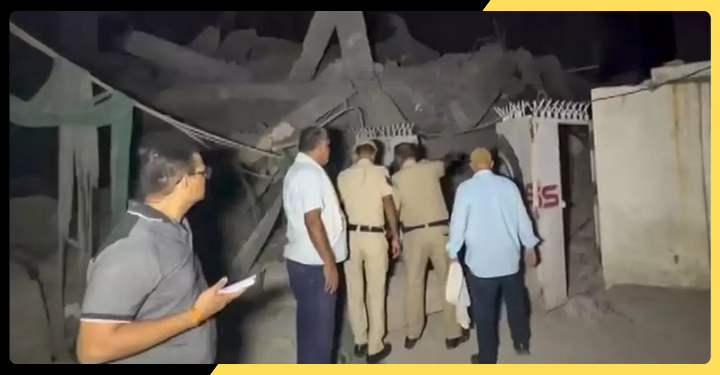
New Delhi: The collapse of a building near Saket Metro Station in South Delhi has reignited concerns about structural safety and urban infrastructure, as emergency teams continue rescue operations following the incident. Authorities confirmed that eight people were rescued from the debris, while several others were feared trapped beneath the collapsed structure.
Thank you for reading this post, don't forget to subscribe!The incident occurred in a busy neighborhood near one of Delhi’s major metro stations, causing panic among residents and commuters. Witnesses reported hearing unusual cracking sounds moments before the building suddenly collapsed, creating a massive cloud of dust and debris that spread across the surrounding area.
Residents living nearby described scenes of confusion and fear immediately after the collapse. Many rushed toward the site after hearing cries for help from beneath the rubble. Local shopkeepers and passersby were among the first to assist rescue efforts, attempting to remove debris and help trapped individuals before emergency personnel arrived.
Authorities quickly mobilized rescue teams, including personnel from the Delhi Fire Service, police department, and disaster management agencies. Emergency responders reached the location within a short time and began coordinating search-and-rescue operations. Their primary focus was locating survivors and providing immediate medical assistance to those injured.
Officials confirmed that eight individuals were rescued during the initial stages of the operation. The injured were transported to nearby hospitals, where medical teams provided treatment for fractures, cuts, bruises, and respiratory complications caused by dust inhalation. Hospital authorities stated that several victims were undergoing observation while receiving necessary care.
The rescue operation proved particularly challenging due to the unstable condition of the debris. Large concrete slabs, damaged support structures, and exposed steel reinforcements created hazardous conditions for emergency workers. Rescue teams proceeded cautiously to avoid triggering further collapses while continuing their search for survivors.
Heavy machinery was deployed to clear sections of rubble and create access points for rescuers. Advanced search equipment, including thermal imaging cameras and life-detection sensors, was used to identify potential signs of life beneath the debris. Officials expressed hope that additional survivors could still be located as operations continued.
Police established security barriers around the disaster site to ensure public safety and facilitate rescue activities. Traffic movement in the surrounding area was significantly disrupted, with several roads temporarily restricted to allow emergency vehicles and equipment to reach the location efficiently.
Family members of individuals believed to be trapped gathered near the site throughout the day, anxiously awaiting updates from rescue officials. Temporary assistance centers were established to provide information, support, and counseling services to affected families.
While rescue efforts remained ongoing, attention increasingly turned toward questions regarding the cause of the collapse. Municipal authorities and structural engineers launched a preliminary investigation to determine what factors may have contributed to the incident. Officials indicated that the building’s construction history, maintenance records, and compliance with safety regulations would be thoroughly examined.
The collapse has once again highlighted concerns about building safety across the national capital. Urban development experts have frequently warned that aging structures, unauthorized modifications, inadequate maintenance, and poor enforcement of building codes can create serious safety risks. Many believe stronger oversight is necessary to prevent similar incidents in the future.
Residents of the Saket area voiced concerns about the condition of neighboring buildings. Several community members urged authorities to conduct immediate structural inspections of nearby properties to identify potential hazards. Local associations also called for stricter monitoring of construction activities and greater transparency regarding building safety certifications.
Experts noted that rapid urbanization often places additional pressure on existing infrastructure. As cities continue to expand, maintaining structural integrity and enforcing safety standards become increasingly important. They stressed that preventive inspections and timely repairs are critical to avoiding tragedies caused by structural failures.
Government officials assured the public that all available resources had been deployed to support rescue operations and assist affected families. Senior administrators monitored developments closely and emphasized that a comprehensive investigation would be conducted once emergency efforts were completed.
Medical teams remained on standby throughout the operation, prepared to respond immediately if additional survivors were found. Nearby hospitals were also placed on alert to ensure sufficient capacity for emergency treatment if required.
As rescue operations extended into the evening, floodlights illuminated the disaster site, allowing emergency workers to continue searching through the debris. Volunteers and local residents provided food, water, and logistical assistance to rescue personnel working long hours under difficult conditions.
The building collapse near Saket Metro Station has become a stark reminder of the importance of structural safety and effective regulatory oversight. While the successful rescue of eight people offered a measure of hope, the incident has also raised broader questions about urban safety standards and infrastructure management. As rescue efforts continue and investigators work to determine the cause of the collapse, residents across the city are calling for stronger measures to ensure such tragedies are prevented in the future.


