
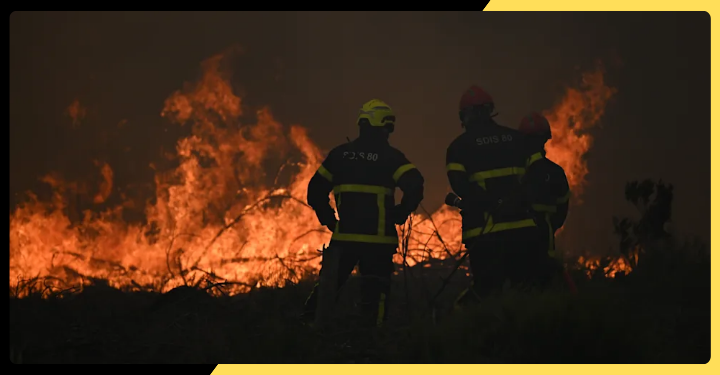
France is facing a dramatic wildfire emergency as a huge blaze in the southwest continues to spread, forcing another 55,000 people to evacuate. The latest evacuation has pushed the total number of people displaced in the main Gironde fire zone to approximately 220,000.
Thank you for reading this post, don't forget to subscribe!The fire has been burning for days and has been fuelled by a dangerous combination of extreme heat, dry forests and powerful winds. As the flames spread, they have moved closer to the Bordeaux region, increasing fears for communities and infrastructure.
The most alarming development has been the unpredictable behaviour of the fire. In some areas, intense heat and rotating winds have created fire whirlwinds. These powerful formations can produce rapidly spinning columns of flames and smoke, making the fire extremely difficult to control.
The fire has also created its own dangerous weather conditions. As enormous amounts of heat rise into the atmosphere, local wind patterns can change, sometimes causing the flames to spread in unexpected directions.
Firefighters have been working under extreme pressure. Thousands of emergency workers have been deployed, supported by aircraft and military resources. Their mission is to prevent the fire from reaching more populated areas while protecting communities already threatened by flames and smoke.
The evacuation has affected residents and tourists alike. People have been forced to leave homes, hotels and holiday locations, often with little time to prepare. Emergency shelters have been opened to provide temporary accommodation.
The large number of evacuees has created a logistical challenge. Authorities must provide food, water, shelter and medical support while also maintaining communication with people who may not know when they can return home.
Smoke has added to the danger. Poor air quality can affect breathing and visibility, forcing officials to issue health warnings. Emergency teams have prepared protective masks and additional medical support.
The situation is part of a broader wildfire crisis across Europe. Spain has also experienced major fires and mass evacuations, showing that extreme weather is affecting multiple countries at the same time.
The French emergency has raised concerns about the future of wildfire seasons. Rising temperatures and drought are leaving forests drier for longer periods. When fires start in these conditions, they can grow rapidly and become difficult to contain.
Experts and authorities are increasingly focused on prevention. This includes better forest management, early warning systems, improved evacuation planning and stronger firefighting capacity.
But for now, the immediate priority is stopping the fire. Authorities are monitoring weather conditions closely, especially wind speed and direction.
A few hours of calmer weather could help firefighters strengthen containment lines. But a return of strong winds could quickly make the situation worse.
Residents in affected areas are being urged to take evacuation orders seriously and leave immediately when instructed. Returning before authorities declare an area safe can be extremely dangerous.
The wildfire crisis in France is a powerful warning about the growing impact of extreme weather. What begins as a single fire can quickly become a national emergency when heat, drought and wind combine.
As the battle continues, firefighters remain on the front line, while thousands of families wait for the moment they can safely return home. Until then, southwest France remains under a major wildfire threat.


