
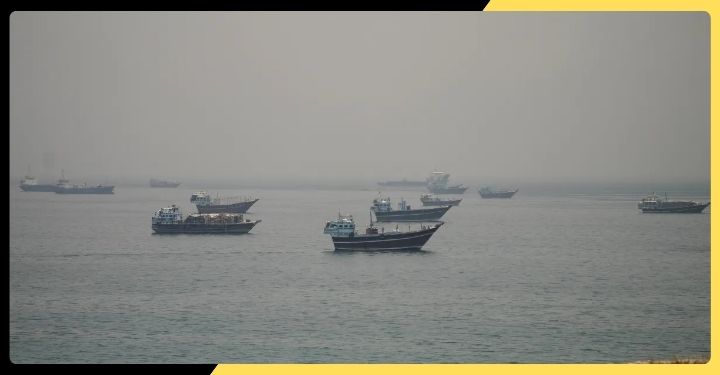
The announcement of a ceasefire between the United States and Iran may have offered temporary relief to global markets and diplomatic circles, but for Indian sailors navigating the dangerous waters of the Strait of Hormuz, the reality remains far from peaceful. While politicians celebrate reduced tensions and negotiators highlight diplomatic progress, merchant seafarers continue to face extraordinary risks in one of the world’s most strategically significant waterways.
Thank you for reading this post, don't forget to subscribe!The Strait of Hormuz serves as a critical artery for global energy supplies. Roughly one-fifth of the world’s oil passes through this narrow channel connecting the Persian Gulf to international waters. Every day, hundreds of commercial vessels, including oil tankers, cargo ships, and container vessels, travel through the region. Among the crews manning these ships are thousands of Indian sailors, who form one of the largest and most respected maritime workforces in the world.
For decades, Indian seafarers have played a vital role in global shipping. Their professionalism, technical expertise, and willingness to work in challenging conditions have made them indispensable to international shipping companies. Yet when geopolitical tensions erupt, they often become the forgotten victims of conflicts they neither create nor influence.
Recent incidents in and around the Strait of Hormuz have underscored this harsh reality. Ships operating in the region have faced missile threats, drone attacks, naval confrontations, and heightened military surveillance. Even when ceasefires are announced, the residual dangers remain. Commercial vessels can still find themselves caught in the middle of misunderstandings, miscalculations, or military operations targeting other actors.
The human cost of these dangers is often overlooked. Behind every sailor is a family waiting at home. Many Indian seafarers spend months away from their loved ones, working long hours to support their families and contribute to India’s economy through remittances. For them, maritime employment is not merely a career but a lifeline that sustains entire households.
When a vessel becomes involved in a security incident, the consequences extend far beyond the ship itself. Families endure anxiety and uncertainty. Communities lose breadwinners. Children lose parents. The psychological burden on surviving crew members can be immense, affecting their mental health long after the incident has passed.
The situation also exposes a broader challenge for India. As a nation with significant maritime interests and one of the world’s largest pools of seafarers, India must balance diplomatic relationships with competing powers while ensuring the safety of its citizens abroad. This balancing act becomes particularly difficult when tensions involve strategic partners and critical energy suppliers.
India’s government has often demonstrated its commitment to protecting citizens overseas through evacuation missions and diplomatic interventions. However, safeguarding merchant sailors operating in international waters presents unique challenges. Unlike tourists or expatriates residing in specific locations, seafarers move constantly through areas where threats can emerge suddenly and without warning.
The global shipping industry also bears responsibility. Shipping companies must invest in enhanced security measures, improved communication systems, and comprehensive emergency response plans. Crew members deserve adequate training to deal with security threats, as well as access to mental health support following traumatic events.
International organizations, including maritime regulators and shipping associations, should strengthen efforts to protect civilian vessels in conflict-prone regions. The principle that commercial shipping should remain insulated from geopolitical disputes must be reinforced through international cooperation and accountability mechanisms.
The ceasefire narrative often focuses on military calculations, diplomatic achievements, and economic implications. Missing from these discussions are the ordinary workers who continue to operate in dangerous environments despite official declarations of peace. For Indian sailors in the Strait of Hormuz, a ceasefire announced in a conference room does not automatically translate into safety on the deck of a tanker navigating contested waters.
True peace is measured not only by the absence of military escalation but by the security of civilians whose livelihoods depend on stability. Until merchant sailors can travel through the Strait of Hormuz without fear of becoming collateral damage in geopolitical confrontations, claims of peace will remain incomplete.
As the world watches developments between Washington and Tehran, it must also remember the men and women working at sea. Their contribution to global commerce is immense, yet their sacrifices often go unnoticed. The deaths and dangers faced by Indian sailors are a reminder that the consequences of international tensions extend far beyond political headlines.
A ceasefire may reduce the risk of a wider conflict, but for those who continue to navigate one of the world’s most volatile maritime corridors, the journey remains fraught with uncertainty. Their safety should not be an afterthought in diplomatic negotiations. It should be a central measure of whether peace has truly been achieved.


