
The Gulf region is witnessing another major escalation after the United Arab Emirates suspended all trade and financial dealings with Iran indefinitely.
Thank you for reading this post, don't forget to subscribe!The UAE says the move follows the alleged launch of two ballistic missiles from Iran toward Emirati territory. Iran has rejected the accusation, but the dispute has intensified an already fragile security environment.
The UAE Foreign Ministry announced that all trade, commercial exchanges and financial transactions with Iran would remain suspended until further notice. Officials cited escalating regional developments that threaten peace and security.
The decision comes after weeks of rising tensions around the Gulf and the Strait of Hormuz.
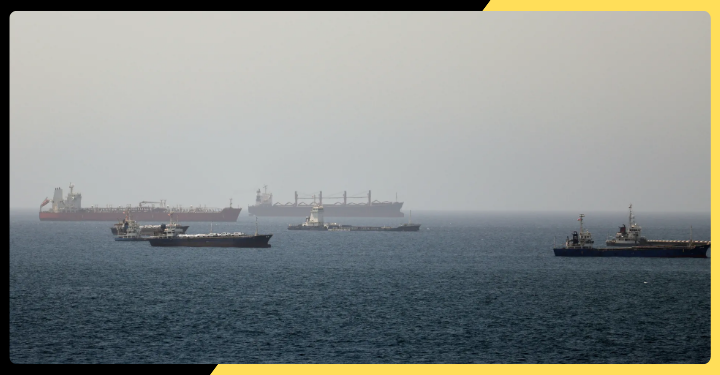
The UAE has accused Iran of several attacks on vessels linked to its energy sector. One recent incident involved an ADNOC vessel travelling through the Strait of Hormuz. UAE officials said the vessel came under attack but no injuries were reported.
Earlier, two UAE-operated tankers were reportedly attacked by drones while passing through the Strait. Although there were no reported deaths, the incidents raised concerns among international shipping operators.
The latest missile allegation has pushed the relationship to another level.
UAE authorities say two ballistic missiles were launched from Iran. One missile reportedly landed in the sea outside UAE waters, while another fell within UAE waters. Iran has denied responsibility and rejected the accusation.
The disagreement highlights the wider problem facing the region: competing claims, military activity and limited trust between governments.
The UAE has significant strategic and economic interests in maintaining stability. Dubai and Abu Dhabi depend heavily on international trade, aviation, shipping and energy markets.
Any prolonged disruption in the Gulf could therefore have consequences for the UAE’s economy.
At the same time, the country appears determined to demonstrate that attacks on its territory or commercial interests will not be ignored.
The trade suspension could also affect Iran significantly. The UAE has historically served as an important gateway for Iranian imports and re-export activities. A prolonged freeze could disrupt supply chains and increase costs for Iranian businesses.
The financial restrictions could make matters even more difficult by affecting payments between companies.
International companies will also be watching closely. If tensions around the Strait of Hormuz continue, shipping companies could face higher insurance costs and delays.
Energy markets are particularly sensitive to developments in the region. Hormuz is one of the world’s most important maritime energy routes, and concerns over its security can quickly influence oil and gas prices.
The broader geopolitical context is also important. The region remains affected by confrontation involving Iran, the United States and Israel. Recent developments have included military strikes, threats against shipping and uncertainty over diplomatic negotiations.
The UAE’s trade suspension could therefore be viewed as part of a much larger regional struggle.
For diplomats, the priority will be preventing the latest dispute from triggering further military escalation.
The UAE may seek assurances that its territory and shipping will not be targeted. Iran, meanwhile, is likely to continue rejecting accusations it considers unfounded.
The absence of trust could make negotiations difficult.
However, economic pressure can sometimes create incentives for diplomatic engagement. Both sides have reasons to avoid a permanent breakdown in commercial relations.
The UAE benefits from regional trade, while Iranian businesses benefit from access to Emirati logistics and markets.
Whether those economic interests can overcome security concerns remains uncertain.
For now, the UAE has chosen a firm response. The indefinite suspension sends a powerful signal to Tehran and to other countries watching the Gulf crisis.
The coming weeks will reveal whether the measure contributes to de-escalation or instead becomes another source of tension.
What is clear is that the latest UAE-Iran dispute is no longer limited to diplomatic statements. It now directly affects trade, finance, shipping and regional economic stability.