
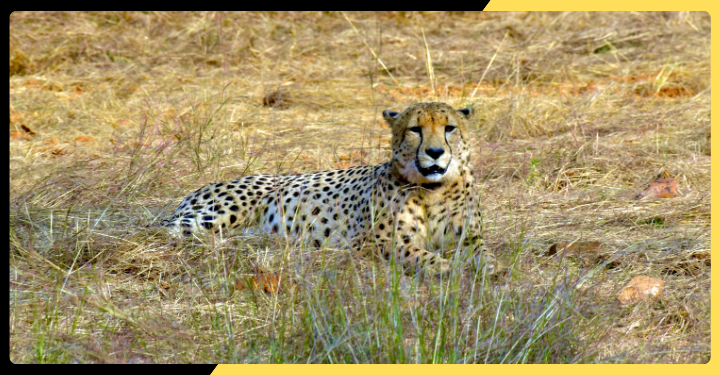
India’s flagship wildlife initiative, Project Cheetah, has come under renewed pressure after four month-old cubs died at Kuno National Park. The incident has triggered concern among wildlife experts and intensified scrutiny over the management of the ambitious conservation programme.
Thank you for reading this post, don't forget to subscribe!The cubs, born to an African cheetah relocated to India, were found dead during routine surveillance by forest officials. Their birth had earlier been celebrated as a landmark achievement for the project, which aims to reintroduce cheetahs into Indian forests after the species disappeared from the country decades ago.
Authorities stated that investigations are underway to determine the exact cause of death. Preliminary findings indicate that heat stress, dehydration, or other medical complications may have played a role.
The latest deaths have revived criticism surrounding the cheetah project, which has already faced setbacks due to the deaths of several adult animals since its launch. Conservationists are now questioning whether sufficient safeguards exist to protect vulnerable cubs during harsh summer conditions.
Kuno National Park was chosen as the primary site for the project because of its grassland ecosystem and prey base. However, some experts argue that the reserve still faces ecological and infrastructural limitations that need urgent attention.
Supporters of the initiative maintain that setbacks are a normal part of wildlife restoration efforts. They point out that cub mortality in wild cheetah populations is naturally high and that conservation programmes must be evaluated over longer periods.
Nevertheless, critics believe the repeated incidents indicate the need for stronger scientific planning and independent monitoring. Some wildlife specialists have urged authorities to reassess management practices and adopt more adaptive conservation strategies.
The deaths have also generated emotional reactions among wildlife enthusiasts and local residents. The cheetah project had captured national attention as a symbol of India’s commitment to biodiversity restoration and environmental conservation.
Government officials said veterinary teams are closely monitoring the mother cheetah and all other animals in the reserve. Enhanced surveillance measures and additional health checks have reportedly been implemented after the incident.
Environmental groups are calling for greater transparency in the project’s operations. They argue that detailed health reports, habitat studies, and management data should be made publicly available to encourage scientific collaboration and accountability.
Project Cheetah remains one of the most closely watched wildlife programmes in the world. Conservationists globally are observing whether India can successfully establish a self-sustaining cheetah population after decades of extinction.
While the deaths of the four cubs represent a painful setback, experts note that wildlife restoration is often a long and uncertain journey. Every challenge, they say, provides lessons that can shape future conservation strategies.
As officials continue investigations, the tragedy at Kuno National Park has once again highlighted both the ambition and fragility of India’s effort to bring cheetahs back to the wild.


