
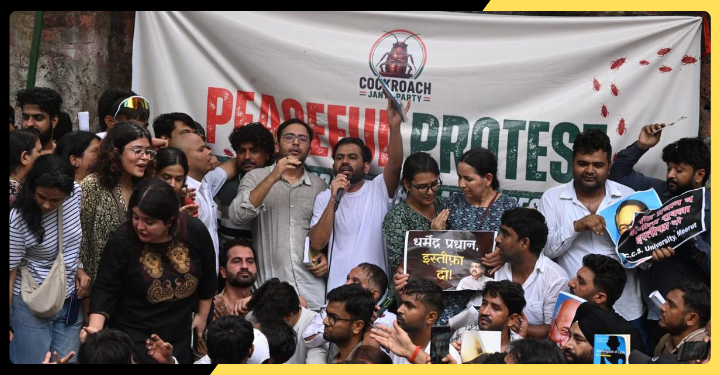
A large-scale protest at Jantar Mantar in New Delhi has drawn attention to the growing involvement of students and young citizens in public affairs. Organized under the banner of the Cockroach Janta Party, the demonstration brought together participants from educational institutions, youth organizations, and social groups who gathered to raise concerns about issues affecting the younger generation. The event gained further prominence when social activist Abhijeet Dipke joined the rally and expressed support for the movement.
Thank you for reading this post, don't forget to subscribe!The protest began in the morning as students from different parts of Delhi and neighboring regions arrived at the venue carrying banners, posters, and placards. The messages reflected a wide range of concerns, including educational opportunities, employment challenges, public accountability, and youth participation in governance. Organizers described the rally as a platform designed to encourage democratic engagement and provide young people with an opportunity to voice their opinions.
Jantar Mantar, long regarded as one of the country’s most significant spaces for public demonstrations, provided the backdrop for a day of speeches, discussions, and peaceful activism. Participants gathered in groups to exchange ideas and discuss the challenges they believe are shaping the future of students and young professionals across the nation.
The atmosphere at the venue was energetic yet disciplined. Volunteers coordinated activities, guided participants, and ensured that the rally remained organized throughout the day. Protesters raised slogans, held discussions, and listened attentively to speakers representing various student groups and social organizations.
One of the most anticipated moments of the rally came with the arrival of Abhijeet Dipke. His participation generated enthusiasm among attendees, many of whom viewed his presence as an endorsement of youth-led civic engagement. As he entered the venue, supporters greeted him warmly and expressed appreciation for his decision to stand alongside students and young activists.
Addressing the gathering, Dipke spoke about the importance of active citizenship and democratic participation. He emphasized that young people play a vital role in shaping the future of society and should continue engaging with issues that affect their communities. According to him, meaningful change often begins when citizens come together to express their concerns through peaceful and constructive means.
Dipke encouraged students to remain informed about public issues and to contribute positively to national conversations. He stressed that democratic societies benefit when young citizens actively participate in dialogue and work toward solutions through lawful and responsible methods. His remarks resonated with many participants, who applauded his call for greater civic involvement.
Several student leaders also took the stage to address the crowd. Their speeches focused on concerns ranging from educational reforms and skill development to employment opportunities and social inclusion. Speakers highlighted the challenges faced by many young people and called for policies that better address the aspirations and needs of the youth population.
Throughout the rally, participants emphasized the importance of creating spaces where students can express their views and engage with broader societal issues. Many attendees said they joined the protest because they wanted their concerns to be acknowledged and discussed at higher levels of decision-making.
The demonstration also attracted considerable attention online. Social media platforms were filled with updates, photographs, and video clips from the event. Supporters used digital channels to share key messages from speeches and discussions, helping to extend the reach of the protest beyond the physical gathering at Jantar Mantar.
Observers noted that the rally reflects a wider trend of increasing youth participation in public life. Across the country, students and young professionals are becoming more engaged in discussions about policy, governance, and social development. Public demonstrations such as this one provide opportunities for young citizens to collectively express their perspectives and contribute to national conversations.
Despite differences in individual concerns, participants shared a common belief that youth voices should play a more significant role in shaping public policy. Many expressed hope that the rally would encourage broader discussions about the issues raised during the event and inspire continued engagement among students and young citizens.
The peaceful nature of the protest was frequently highlighted by organizers, who praised participants for maintaining discipline and respecting guidelines throughout the gathering. Volunteers worked continuously to ensure smooth coordination and assist attendees whenever necessary.
As the day came to a close, organizers described the event as a successful example of democratic participation and youth engagement. They thanked attendees for their support and reiterated their commitment to continuing discussions on issues affecting students and young people.
The rally at Jantar Mantar demonstrated the growing influence of youth voices in India’s public sphere. With students leading the conversation and figures such as Abhijeet Dipke lending support, the protest underscored the importance of civic engagement and peaceful democratic expression. Whether the concerns raised during the rally translate into future policy discussions remains to be seen, but the event clearly highlighted the determination of young citizens to participate actively in shaping the nation’s future.


