
Saudi Arabia’s interception of a drone south of Mecca has highlighted the growing security challenges facing the kingdom as fighting with Yemen’s Houthi movement intensifies.
Thank you for reading this post, don't forget to subscribe!The Saudi-led coalition said the drone was intercepted and destroyed on Tuesday evening before entering the restricted airspace of Mecca. Coalition spokesman Major General Turki al-Malki said Saudi air-defence forces carried out the interception at approximately 6:50 p.m.
Saudi Arabia described the drone as belonging to the Houthi movement and said the incident represented an attempt to threaten Mecca. The coalition said the aircraft was destroyed before entering the prohibited airspace and that debris fell south of the city.
The Houthis have denied targeting Mecca. Their officials have rejected Saudi Arabia’s account and said the group did not target the holy city or its religious sites.
The competing accounts come at a time of increasing military activity across Saudi Arabia and Yemen. Saudi authorities have reported a number of recent drone and missile attacks, while the Houthis have claimed responsibility for attacks against Saudi targets.
Saudi officials said earlier attacks involving Khamis Mushait, Abha and Taif caused civilian injuries and property damage. The incidents have prompted additional security measures and warnings across the kingdom.
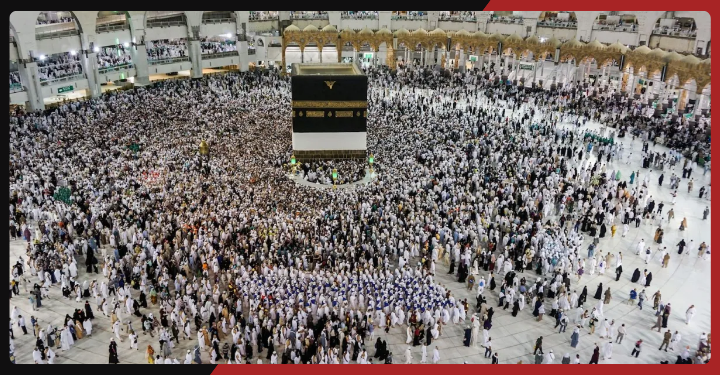
The situation around Mecca is particularly sensitive because the city is the center of Islamic worship. The Grand Mosque and Kaaba are located there, and millions of Muslims travel to the city for Hajj and Umrah.
Saudi authorities have repeatedly emphasized their responsibility to protect pilgrims and residents. After the latest interception, the coalition again described the security of the Two Holy Mosques as a “red line.”
The coalition also linked the latest incident to a previous 2017 ballistic missile launch toward Mecca. Saudi officials therefore regard the latest episode as part of a longer history of threats involving Houthi forces.
The Houthis’ denial remains an important part of the story. Without independent evidence establishing the drone’s intended target, the precise purpose of the aircraft cannot be conclusively determined from the competing statements alone.
The wider context, however, is clear: the Yemen conflict is once again creating direct security concerns for Saudi Arabia.
Saudi Arabia became involved militarily in Yemen in 2015 after the Houthis captured Sanaa and expanded their territorial control. The Saudi-led coalition supported Yemen’s internationally recognized government and carried out air operations against Houthi positions.
After years of fighting, the conflict entered a quieter period. A truce and diplomatic negotiations reduced the frequency of major attacks. The latest escalation has raised concerns that this relative calm may be breaking down.
The conflict also has implications for international trade. Yemen’s location near the Red Sea and Bab el-Mandeb Strait gives the Houthi movement proximity to one of the world’s most important maritime corridors.
Saudi oil exports have also faced additional pressure because regional disruptions have affected traditional shipping routes. The security situation therefore extends beyond military confrontation and into energy and economic concerns.
The reported drone interception near Mecca adds another dimension because of the city’s religious importance. Any attack or attempted attack in its vicinity can generate strong reactions throughout the Muslim world.
Saudi Arabia’s decision to emphasize that the drone was destroyed before entering restricted airspace indicates the importance of protecting the city from even indirect threats.
The episode also demonstrates the continuing importance of modern air-defence technology. Drones have become increasingly prominent in conflicts across the Middle East, with governments relying on radar, interceptor systems and other defensive technologies to protect populated areas.
The next stage of the crisis will depend on developments between Saudi Arabia and the Houthis. If attacks continue, the risk of further escalation could increase. At the same time, diplomatic efforts could potentially limit the spread of the conflict.
For now, the reported destruction of the drone has prevented it from entering Mecca’s restricted airspace, according to Saudi authorities. But the disagreement over the drone’s intended target, combined with renewed fighting elsewhere, means the incident remains part of a much larger regional security crisis.
The development has once again placed Yemen, Saudi Arabia and the security of Mecca at the center of international attention.