
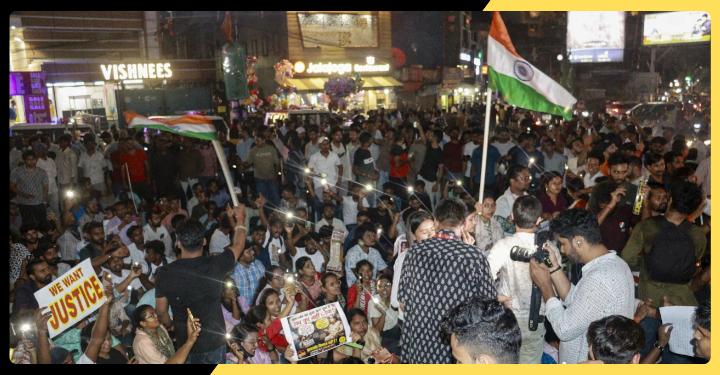
The ongoing student demonstration in Ranchi reached its sixth day, highlighting growing public expectations for a constructive response from the government. What began as a student-led campaign has gradually expanded into a wider civic movement, drawing support from parents, teachers, activists, and political organizations. The decision of the Cockroach Janta Party (CJP) to extend solidarity to the protesters further increased public attention, making the demonstration one of the most discussed developments in Jharkhand.
Thank you for reading this post, don't forget to subscribe!Students assembled once again at the protest venue early in the morning, determined to continue their peaceful campaign. Carrying placards and banners, they called for dialogue, accountability, and timely action on their concerns. Organizers reminded participants that maintaining discipline remained the movement’s greatest strength and urged everyone to avoid confrontation with the authorities.
Throughout the day, the protest site witnessed speeches, group discussions, and cultural activities aimed at maintaining morale among participants. Volunteers worked tirelessly to distribute food, drinking water, and medical supplies, ensuring that students participating in the prolonged sit-in remained safe and comfortable. Many local residents also visited the venue to express solidarity and encourage the protesters to continue their peaceful struggle.
The arrival of CJP representatives marked one of the day’s major developments. Party leaders addressed the gathering, stating that peaceful protest is a fundamental democratic right and that governments should actively engage with citizens raising legitimate concerns. They called upon the administration to open communication channels with student representatives and work toward a mutually acceptable solution.
Student leaders welcomed the support while reiterating that the protest remained entirely student-driven. According to organizers, no political party would determine the movement’s strategy or objectives. They stressed that every important decision would continue to be taken collectively by student representatives after consultation with participants.
Security arrangements remained extensive, with police personnel deployed across the protest venue and nearby roads. Authorities monitored the demonstration closely but confirmed that there had been no major law-and-order incidents. Traffic diversions were implemented where necessary, and officials appealed to the public for patience and cooperation.
Meanwhile, the protest continued to receive significant attention on social media. Images of students holding peaceful marches, delivering speeches, and participating in cultural events were shared widely, generating discussions across digital platforms. Supporters praised the students for maintaining order despite the prolonged nature of the demonstration, while many observers called for immediate dialogue between the government and protest leaders.
Experts believe that youth-led demonstrations often become influential when they remain peaceful, organized, and focused on clearly defined objectives. The Ranchi protest, they argue, has highlighted the importance of civic participation and democratic engagement among young citizens. They also note that prolonged silence from decision-makers can increase public expectations for meaningful action.
As evening fell on the sixth day, organizers reaffirmed that the protest would continue until there was a formal response from the authorities. Students expressed confidence that their determination, combined with growing public support, would eventually encourage constructive engagement. With the movement attracting widespread attention and solidarity from multiple sections of society, the Ranchi student demonstration has become a significant chapter in Jharkhand’s recent public discourse, underscoring the role of peaceful protest in a democratic society.


