
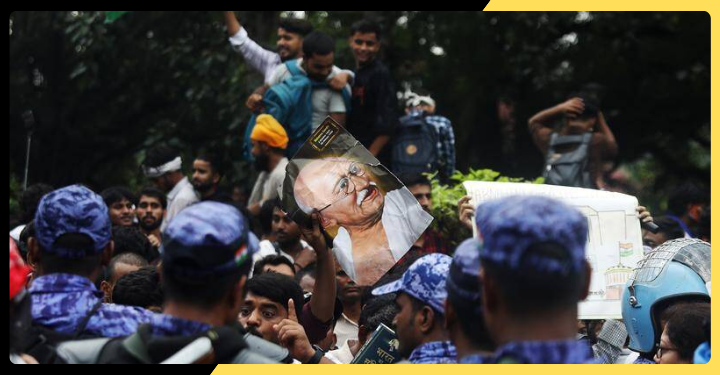
A peaceful demonstration organized by supporters of the fictional “Cockroach Movement” has sparked nationwide discussion after participants attempted to march toward Parliament in New Delhi on Monday. Although the procession was stopped by police before reaching the Parliament complex, the event generated widespread public debate about civic participation, peaceful protests, and the balance between public expression and security.
Thank you for reading this post, don't forget to subscribe!Supporters from several states traveled to the capital to take part in the demonstration, which organizers described as a campaign to encourage greater public engagement with national policymaking. Participants began gathering early in the morning at a designated protest site, carrying banners, placards, and flags representing the movement.
The rally opened with speeches from organizers who urged supporters to remain peaceful and cooperate with law enforcement officials. Volunteers distributed water, first-aid supplies, and informational leaflets while reminding participants to avoid disrupting emergency services or damaging public property.
“Our goal is to express our concerns responsibly and peacefully,” one organizer told the crowd. “Constructive dialogue is the foundation of democracy, and we hope today’s gathering encourages meaningful conversations.”
Authorities had prepared extensive security measures ahead of the planned march. Additional police personnel were stationed around Parliament and nearby government buildings, while barricades and traffic diversions were put in place to manage the expected crowds. Officials said the arrangements were intended to protect public safety and ensure that the demonstration remained orderly.
By late morning, protesters began moving along the approved route toward Parliament. The march proceeded calmly, with participants chanting slogans and carrying signs promoting transparency, accountability, and stronger communication between citizens and public institutions.
When the procession approached the designated security perimeter, police officers halted further movement and informed organizers that access to the restricted zone would not be permitted under existing security regulations. Senior officers met with movement representatives to discuss the situation.
Following the meeting, organizers announced that they would respect the restrictions and instructed supporters to remain peaceful. Instead of attempting to cross the barricades, demonstrators gathered nearby while movement leaders continued addressing the crowd.
A delegation representing the movement later submitted a memorandum through official administrative channels. The document outlined the group’s concerns and requested that lawmakers consider greater opportunities for public consultation on national issues.
Throughout the afternoon, the demonstration remained calm. Volunteers helped distribute refreshments, assisted elderly participants, and encouraged supporters to dispose of litter responsibly before leaving the venue. Medical teams treated a small number of attendees for dehydration caused by the warm weather, but authorities reported no serious injuries.
The protest quickly became a topic of public discussion. Television channels, newspapers, and online platforms carried extensive coverage of the event, with commentators offering differing perspectives on the demonstration. Some observers praised the organizers for maintaining discipline and respecting police instructions, while others discussed the practical challenges of managing large public gatherings in the nation’s capital.
Traffic delays affected several central Delhi roads during the event, but traffic police implemented diversion plans that gradually restored normal movement after the demonstration ended. Businesses and residents in the area experienced temporary disruptions, though authorities reported that essential services continued operating throughout the day.
Political analysts observed that peaceful public demonstrations remain an important feature of democratic societies, allowing citizens to express their opinions while encouraging dialogue with public institutions. They also noted that cooperation between organizers and law enforcement played a significant role in preventing tensions and ensuring the rally concluded without major incidents.
As evening approached, organizers officially concluded the demonstration and thanked supporters for their cooperation. Volunteers cleaned the gathering area before departing, while police removed temporary barricades and reopened affected roads.
Officials confirmed that the memorandum submitted by the movement would be processed through the appropriate administrative channels. Organizers stated that they planned to continue raising awareness through future public meetings, educational programs, and community outreach initiatives conducted within the framework of the law.
Although the fictional march did not reach Parliament, it concluded peacefully and prompted broader discussion about public participation, democratic engagement, and the importance of balancing the right to peaceful assembly with public safety. Both organizers and authorities described the event as an example of how cooperation and dialogue can help ensure large public demonstrations remain orderly and non-violent.