
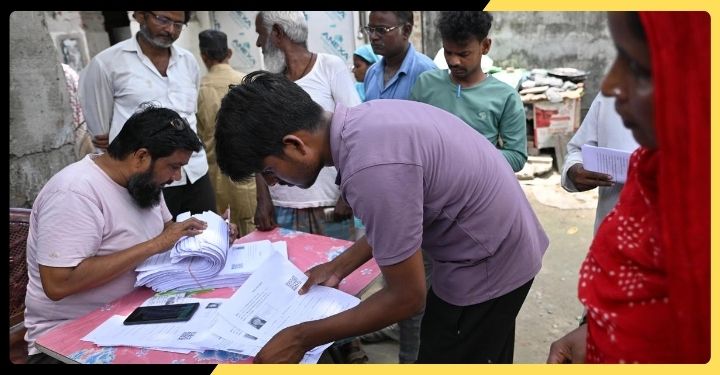
The Supreme Court’s decision to uphold the Special Intensive Revision (SIR) exercise has triggered fresh national debate over electoral reforms and voter verification in India. Calling the initiative an advancement toward free and fair elections, the apex court strongly defended the Election Commission’s authority to maintain clean and accurate electoral rolls.
Thank you for reading this post, don't forget to subscribe!In its judgment, the court observed that electoral transparency is one of the foundations of democracy. The bench stated that inaccurate voter lists containing duplicate or fake entries can undermine public confidence in elections and damage democratic institutions.
The SIR exercise was challenged by several petitioners who argued that the process could unfairly affect vulnerable communities. Concerns were raised about the ability of migrant workers, economically weaker groups, and people without updated documents to successfully complete verification procedures.
Despite these concerns, the Supreme Court ruled that the revision exercise itself is constitutionally valid. According to the judges, ensuring the authenticity of voter records is an essential responsibility of the Election Commission and cannot be ignored in the interest of electoral fairness.
The court emphasized that elections can only be considered genuinely free and fair if voter databases are accurate and transparent. The judges added that the Commission’s powers under the Constitution include taking necessary steps to improve the quality of electoral rolls.
At the same time, the bench made it clear that implementation must remain fair and non-discriminatory. Election authorities were instructed to ensure that no eligible voter is removed without due process. Citizens must be provided with opportunities to correct records, submit documents, and challenge decisions if required.
The Election Commission welcomed the verdict and reiterated that the objective of the SIR exercise is to strengthen democratic credibility. Officials explained that regular revision is necessary because of population movement, deaths, and multiple registrations that naturally occur over time.
Political responses reflected the country’s polarized atmosphere. Supporters of the ruling argued that clean voter lists are essential for preventing electoral malpractice and protecting democratic legitimacy. Opposition leaders, however, insisted that strict oversight is necessary to ensure that implementation does not become arbitrary.
Constitutional experts described the verdict as significant because it recognizes both the importance of electoral integrity and the need to safeguard voting rights. Analysts believe the judgment may encourage future reforms involving digital verification systems and improved voter database management.
The Supreme Court also stressed the role of public awareness in ensuring successful implementation. Authorities were advised to educate voters about revision procedures and deadlines through outreach campaigns and accessible communication strategies.
Observers believe the ruling reflects the judiciary’s broader effort to balance institutional authority with individual rights. While supporting the Election Commission’s powers, the court also emphasized accountability and procedural safeguards.
India’s elections involve one of the world’s largest democratic exercises, making electoral roll management a massive administrative challenge. Experts say periodic revisions are unavoidable if the system is to remain credible and transparent.
The Supreme Court’s endorsement of the SIR exercise is likely to influence political discourse and policy decisions in the years ahead. As debates over electoral reforms continue, the judgment may become a defining reference point in discussions about democracy, accountability, and voter rights in India.


